Older than service area
Across the wider service area, the typical house went up somewhere around 1984 - a lot of 1980s and 90s tract construction. Wheaton skews a good decade and a half older, with a median build year closer to 1959.
 Germantown, MD
Wheaton, Germantown
Wheaton homes mostly went up around 1959, a generation before the 1980s stock common elsewhere in our service area. That age gap changes what maintenance actually finds.
Warning signs
Germantown Garage Door Pros covers Wheaton from about 14 miles out, and the first thing you notice on a maintenance call here is the age of the door itself.
Across the wider service area, the typical house went up somewhere around 1984 - a lot of 1980s and 90s tract construction. Wheaton skews a good decade and a half older, with a median build year closer to 1959.
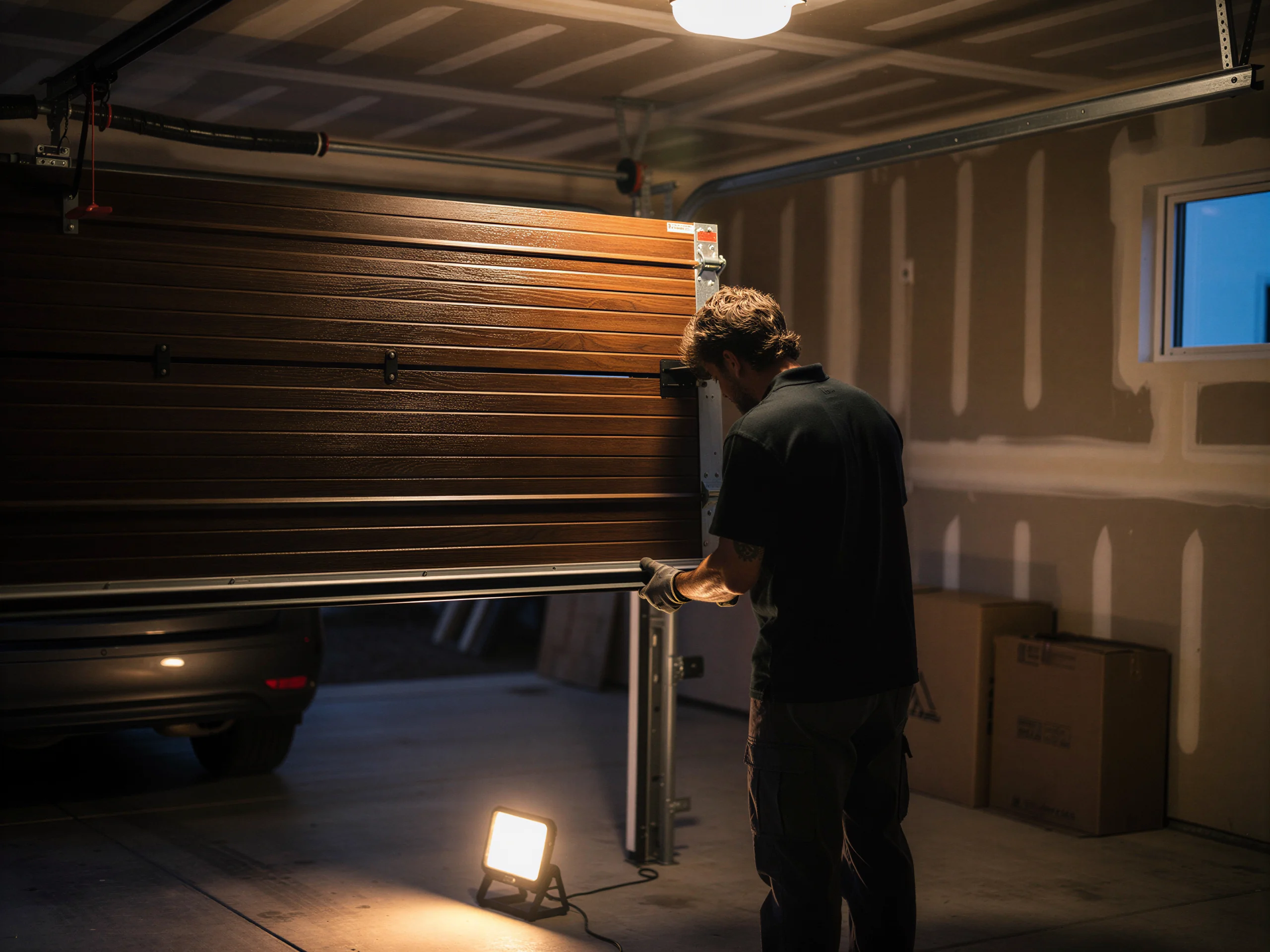
That matters because a door from that era, even if replaced once or twice since, usually sits on hardware never upgraded to match: older track spacing, a different spring mount, sometimes a jamb shifted out of square over sixty-plus years. What we actually find: hinges worn oval, rollers flat-spotted from decades of cold-weather cycles, and brackets with stripped lag screws.
The cold band this region sits in means steel springs lose tension faster than they would in a milder climate, and on a door this age, that spring has usually been recoiled or replaced at least once already, which changes how it behaves. A maintenance visit on a 1959-era door is really an inspection of accumulated small repairs, not a fresh install.
What we actually find on these calls: hinges worn oval instead of round, rollers that have flat-spotted from decades of the same cold-weather cycle, and brackets with stripped lag screws because wood swells and shrinks every winter.
DIY or pro
There's real maintenance a homeowner can do between visits, and none of it requires taking the door apart. Wipe the tracks down and check for a clean, dry channel - in a severe cold climate, grit and old grease combine into a paste that drags on the rollers and makes the opener work harder than it should.
Lubricate hinges and rollers with a light garage-door-specific oil, not WD-40, which evaporates and leaves metal dry again within weeks. Check the weatherstripping at the bottom of the door. On houses built mid-century, the door opening itself sometimes isn't perfectly square anymore, so stock replacement seals can gap at one corner even when they look fine everywhere else.
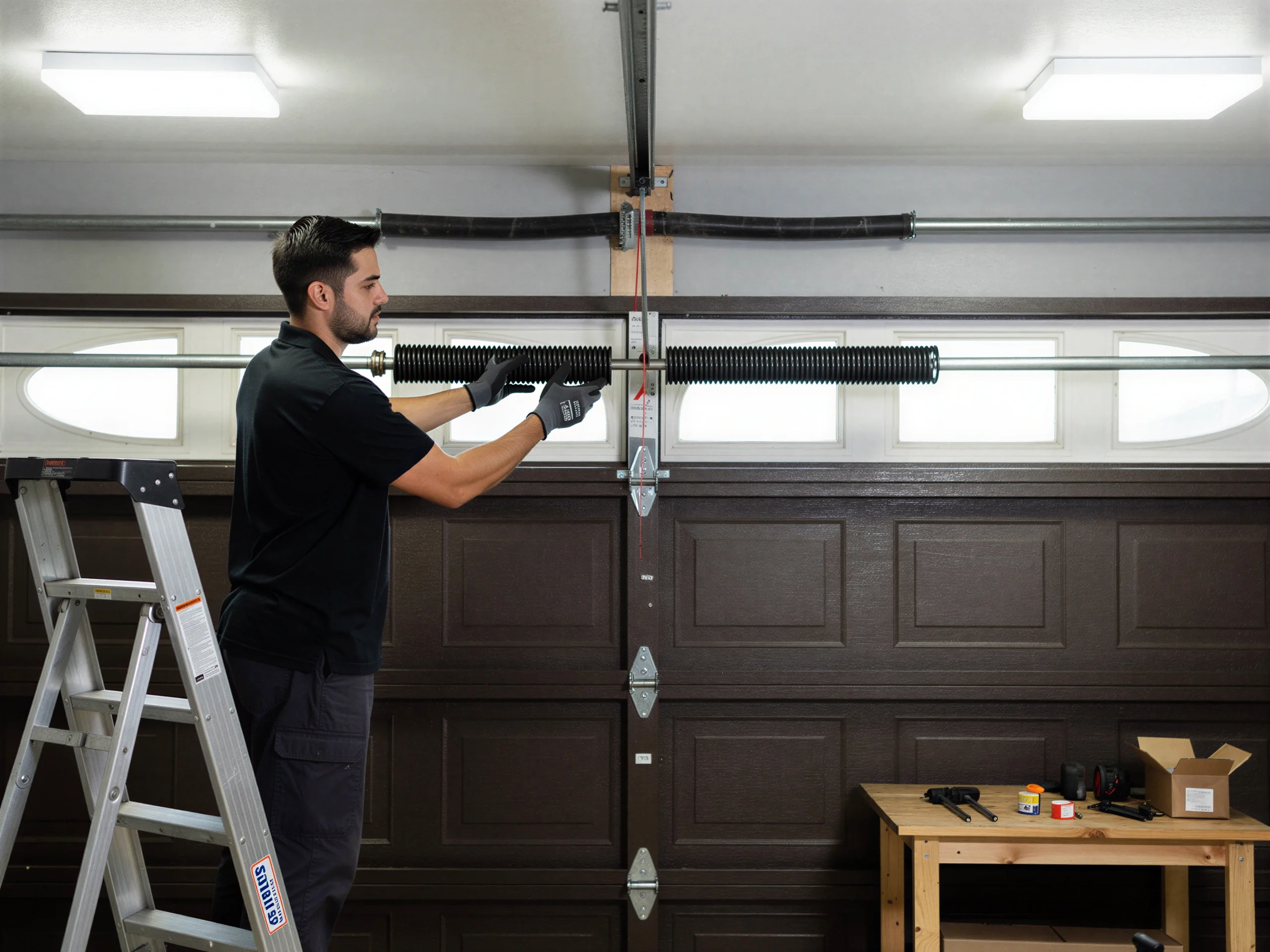
Look for that gap now, before a cold snap turns it into an ice problem. What you shouldn't touch: the torsion spring, any cable under tension, or anything that requires removing the vertical track brackets.
On a door this age, those brackets are often holding on with the original fasteners, and backing one out without knowing what's behind it can let the whole assembly drop. That's not a DIY repair - that's a call.
The repair
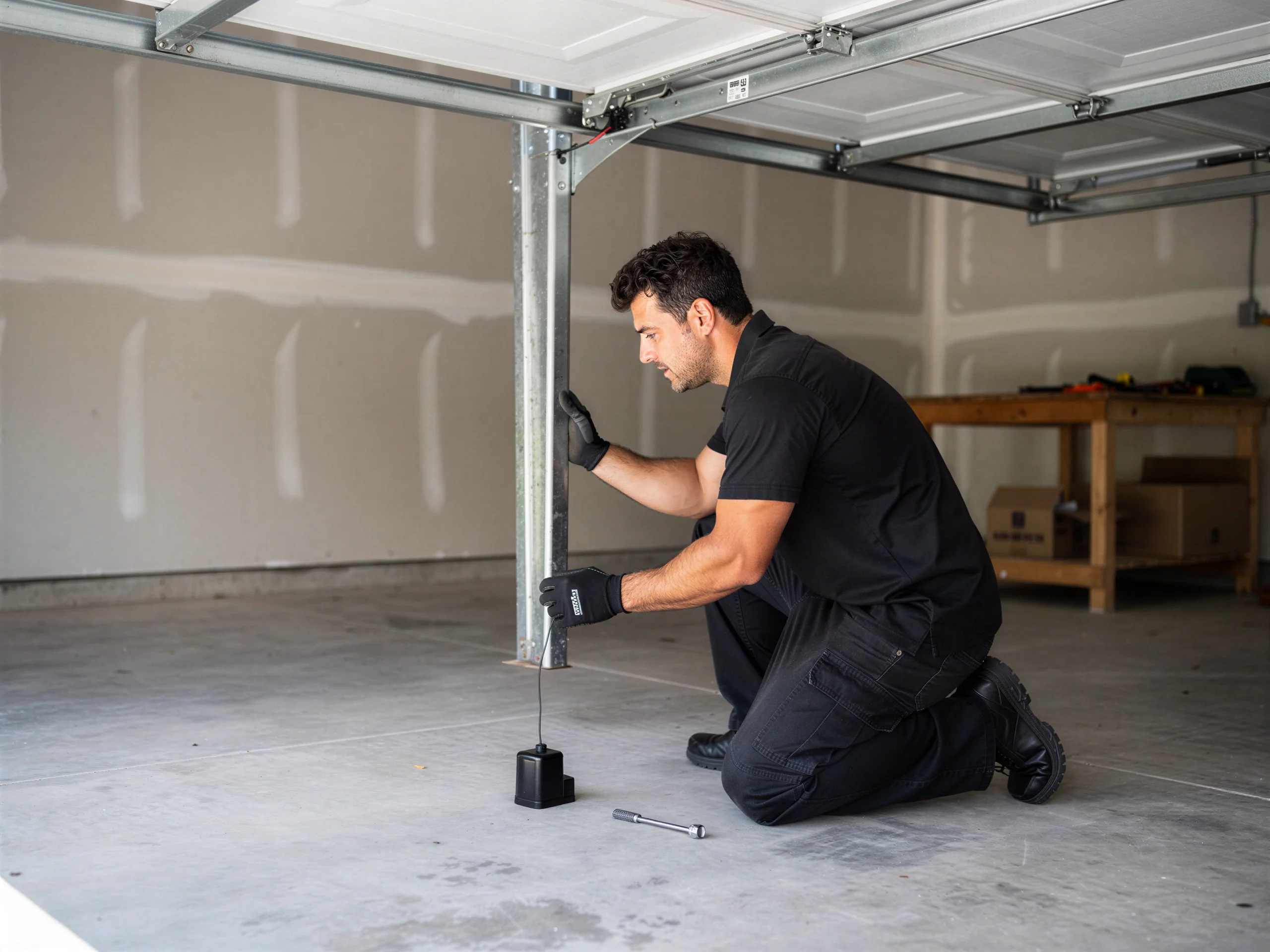
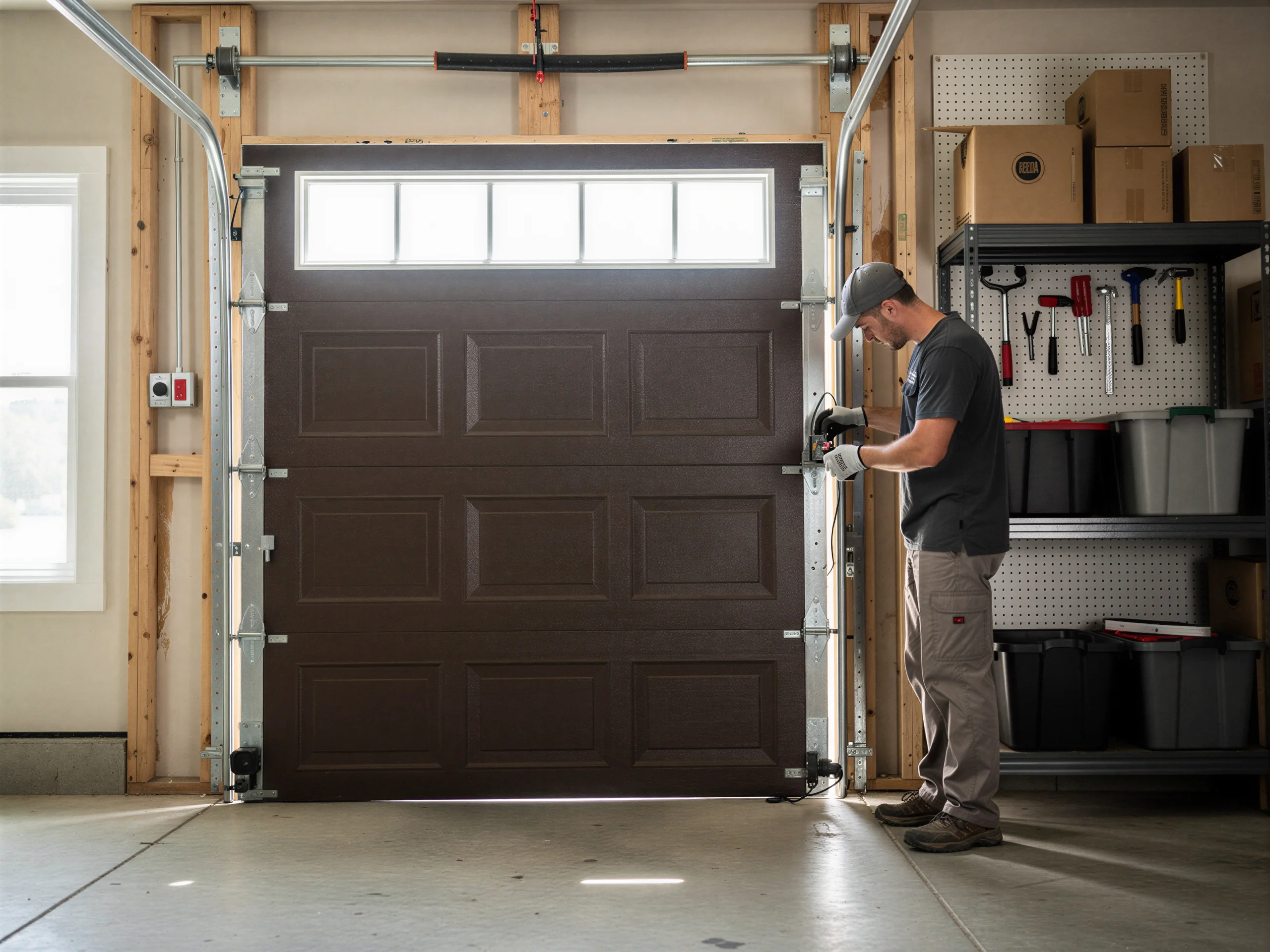
A standard maintenance visit on one of these older Wheaton doors starts with the spring. We check wind count and tension against the door's actual weight, not a generic chart, because a door that's had panels swapped over the years rarely weighs what the original specs say.
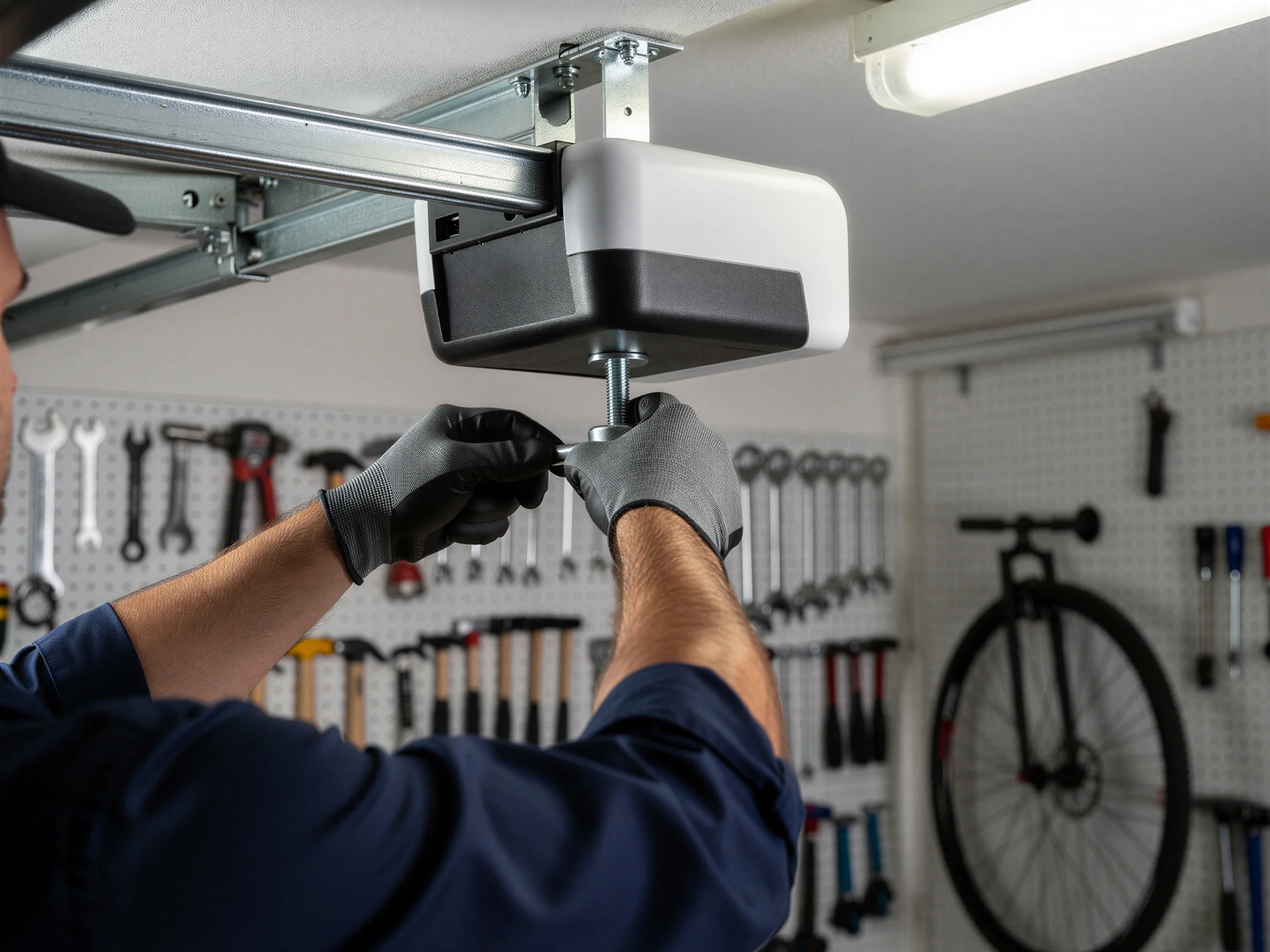
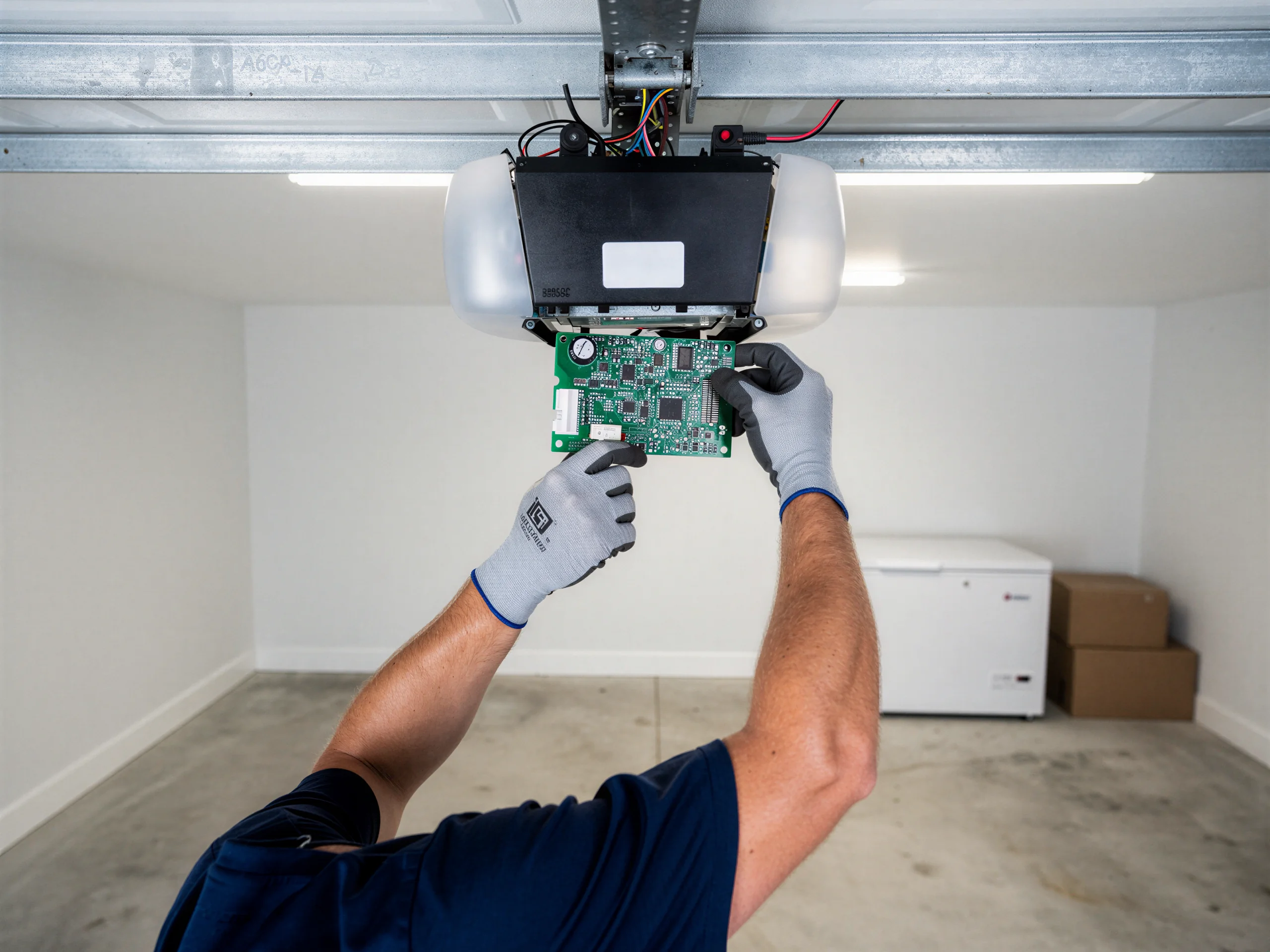
We inspect cable fraying at the drum, check the bottom bracket for stress cracking, and test the opener's force settings - on an older door, auto-reverse sensitivity often needs recalibrating because the door itself has gotten slightly heavier or lighter than when the opener was first set up.
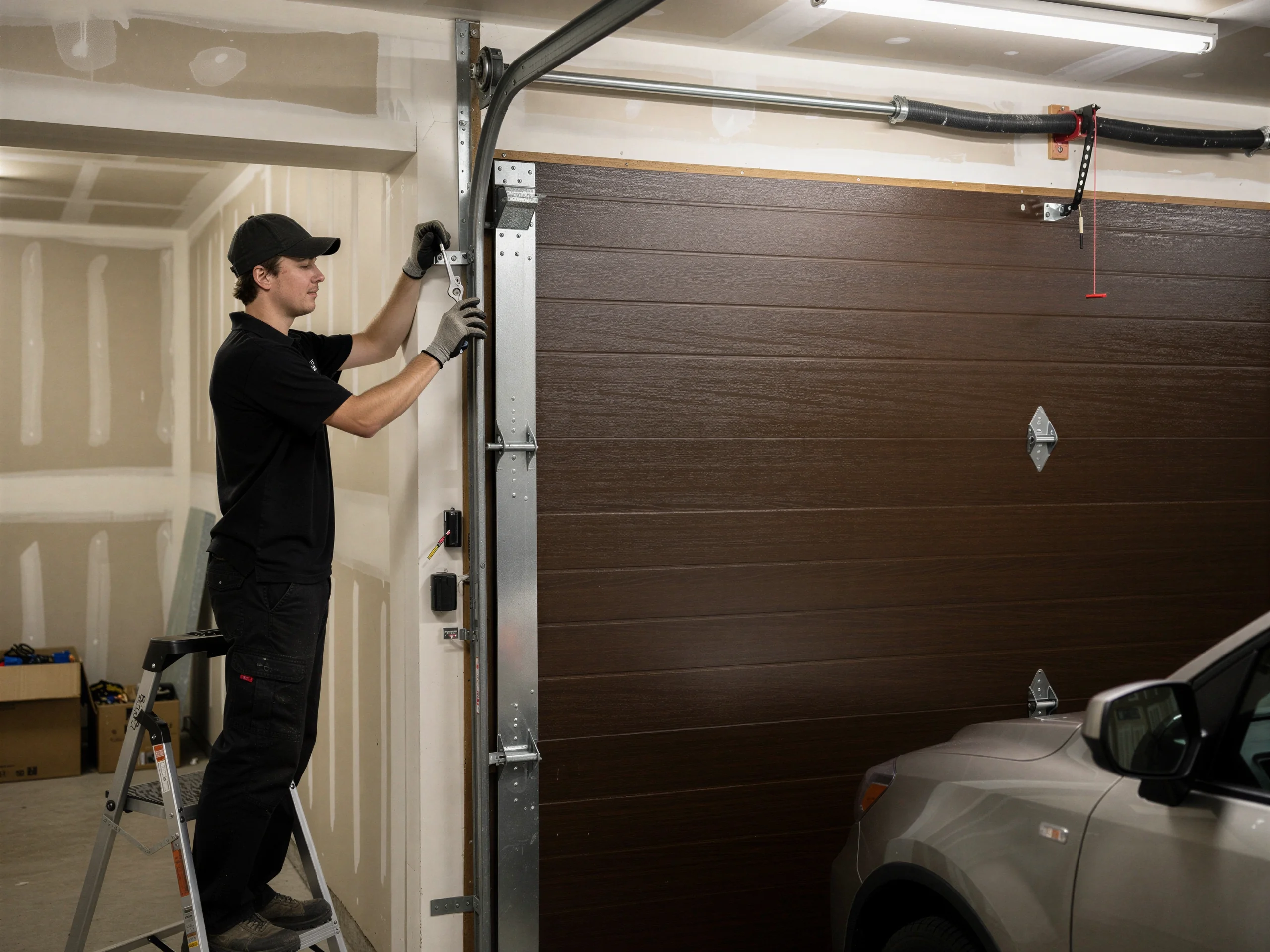
Track alignment gets checked against the framing, not just the track itself, since a house settling since the 1950s can pull the whole opening a few degrees out of true. We won't pretend every issue on a sixty-year-old door is a quick fix.
If the track brackets are rusted through at the lag points, or the jamb has rotted behind the trim, that's a carpentry problem before it's a garage door problem, and we'll say so rather than bolt new hardware to compromised wood.
Booking
Serving Germantown, MD
Germantown Garage Door Pros runs maintenance visits out to Wheaton as part of the wider service area - it's about a 14-mile drive from our base, same territory that covers places like Montgomery Village, North Potomac, and Olney. We don't keep a branch or a drop-in counter in Wheaton itself; a technician comes from Germantown for the appointment, so it's worth booking rather than expecting a same-day walk-up.
If you're not sure whether what you're hearing is a maintenance item or something more, describe it when you call - a grinding on one side versus a slow sag in the middle usually points to different parts, and that changes what the technician brings on the truck.
Questions
A lot of Wheaton housing dates to around 1959, well before the 1980s-90s construction that's typical across much of our service area. Older hardware, settled framing, and springs that have already been through at least one replacement cycle all mean more can drift out of adjustment, so a yearly check catches more here than it would on a newer door.
No. Germantown Garage Door Pros works out of Germantown and covers Wheaton as part of the service area, about 14 miles out. We don't keep a local branch or stock depot in Wheaton, so maintenance visits are scheduled appointments, not drop-ins.
No. Lubricating rollers and hinges and checking weatherstripping are fine to do yourself. Anything involving the torsion spring or cables under tension needs a technician, especially on an older door where the original hardware and fasteners may not match current standards.
Sometimes. If the track brackets are rusted through or the jamb behind the trim has rotted, that's a structural issue, not a maintenance one, and we'll tell you honestly rather than attach new hardware to wood that won't hold it.
Explore more
Ready when you are
Germantown Garage Door Pros repairs and installs garage doors, springs and openers in Germantown, MD and the surrounding area.