
Slow tension and track drift
None of these start as emergencies. They start as a spring losing tension a few turns at a time, a track pulling a hair out of alignment, or hinges that have gone dry and started working the metal around the bolt holes.
 Germantown, MD
Garage door maintenance in Germantown, MD for homes built from the 1950s through the 2010s, tuned for severe cold winters and heavy spring and track wear.
Warning signs
A door that used to glide now hesitates partway up, or it closes crooked and taps one side of the frame before it seats. Sometimes it's a grind from the rollers, sometimes a slow sag in the middle of a wide panel, sometimes the opener straining and clicking before it gives up.
None of these start as emergencies. They start as a spring losing tension a few turns at a time, a track pulling a hair out of alignment, or hinges that have gone dry and started working the metal around the bolt holes.
Houses in this service area went up mostly between 1951 and 2015, with the bulk of that stock dating to the 1980s and 90s across 45 named communities, which means three different generations of spring and opener hardware are still in service within a few miles of each other.
A door that's acting up on a house built in the early 90s is often wearing out for different reasons than one on a house from 2008, even though the symptoms look the same from the driveway. We check the age of the hardware, not just the age of the house, before we tell you what's actually going wrong.
Local causes
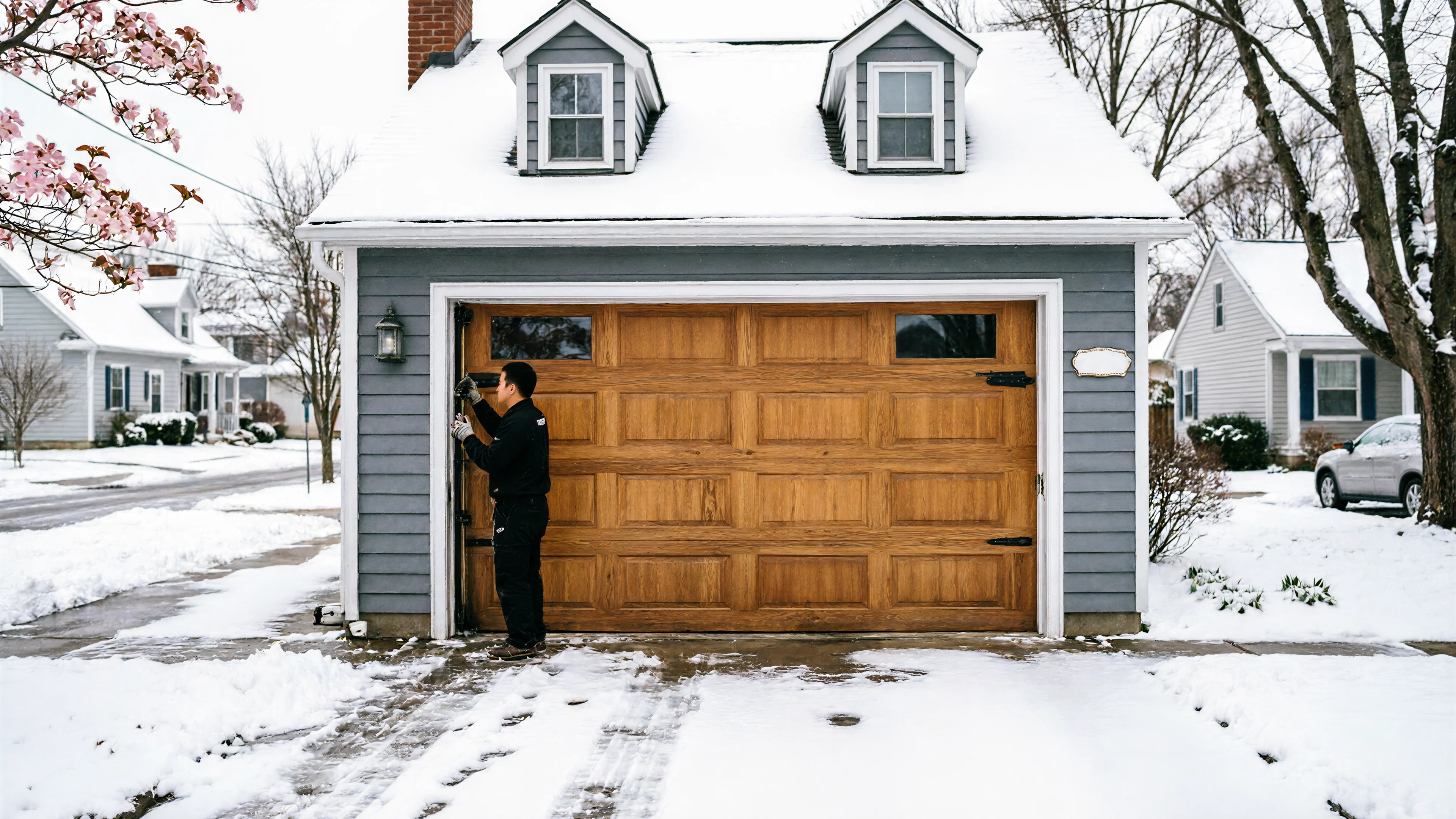
This area sits in a cold, severe climate band, where repeated freeze-thaw swings stiffen grease and shrink metal tracks every winter. Lubricant that worked fine in August turns to paste in January, and a track that was a sixteenth of an inch out of true in summer can bind hard once the metal contracts. Torsion springs lose a little coil tension with every cold snap they cycle through, and nobody notices until the door won't lift past waist height.
Across the 212,225 households we serve, 92,113 are owner-occupied houses with garage doors old enough to need a torsion spring swap at some point. Add in decades of temperature swings and the math is simple: springs rated for a set number of cycles get there faster here than in a mild climate, and tracks that aren't checked for square start fighting the rollers before the owner ever hears a noise. Dust, pollen, and salt-laced road grime in the winter months only speed up what the cold already started. None of this is dramatic. It's slow wear that maintenance catches early and neglect turns into a 10pm call when the spring finally lets go.
Pricing
We don't have a flat number to put here, and we're not going to make one up. What a maintenance visit runs depends on how many moving parts need adjustment, whether a spring is close to its end, and whether the opener needs anything beyond lubrication and a safety check.
With a median household income of $154,514 across this service area, most owners can afford to replace a spring before it snaps a cable, but plenty still wait until the door won't move, and that job always costs more than the one that catches the spring early.
Honest limit here: we won't quote a price over the phone without seeing the door. A squeak on a 1995 door with the original hardware is a different job than a squeak on a door installed five years ago, and guessing at a number before we're standing in front of it does you no favors.
What we will tell you is that a maintenance visit is almost always cheaper than the repair it prevents, and a lot cheaper than a full door replacement.
The repair
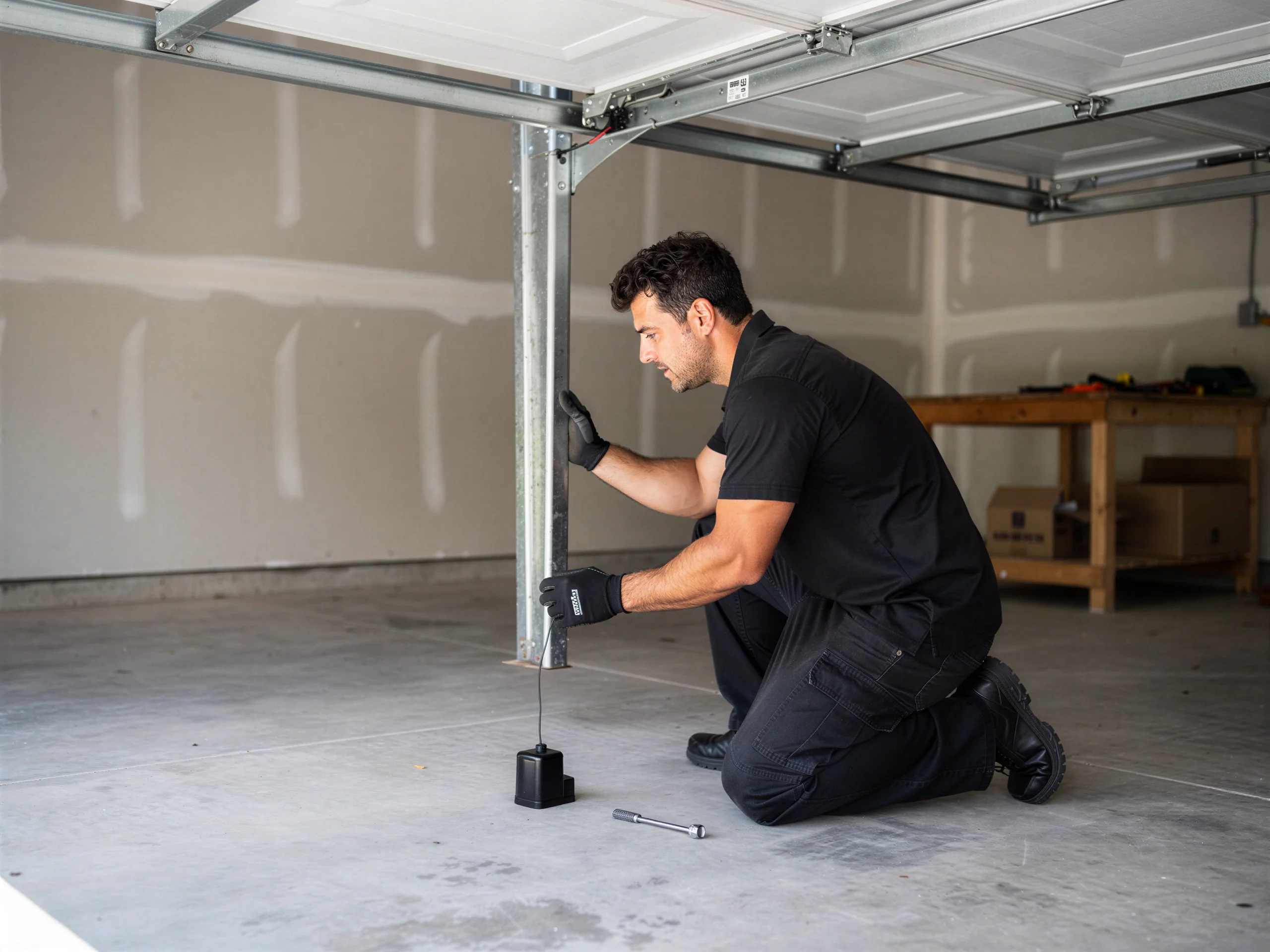
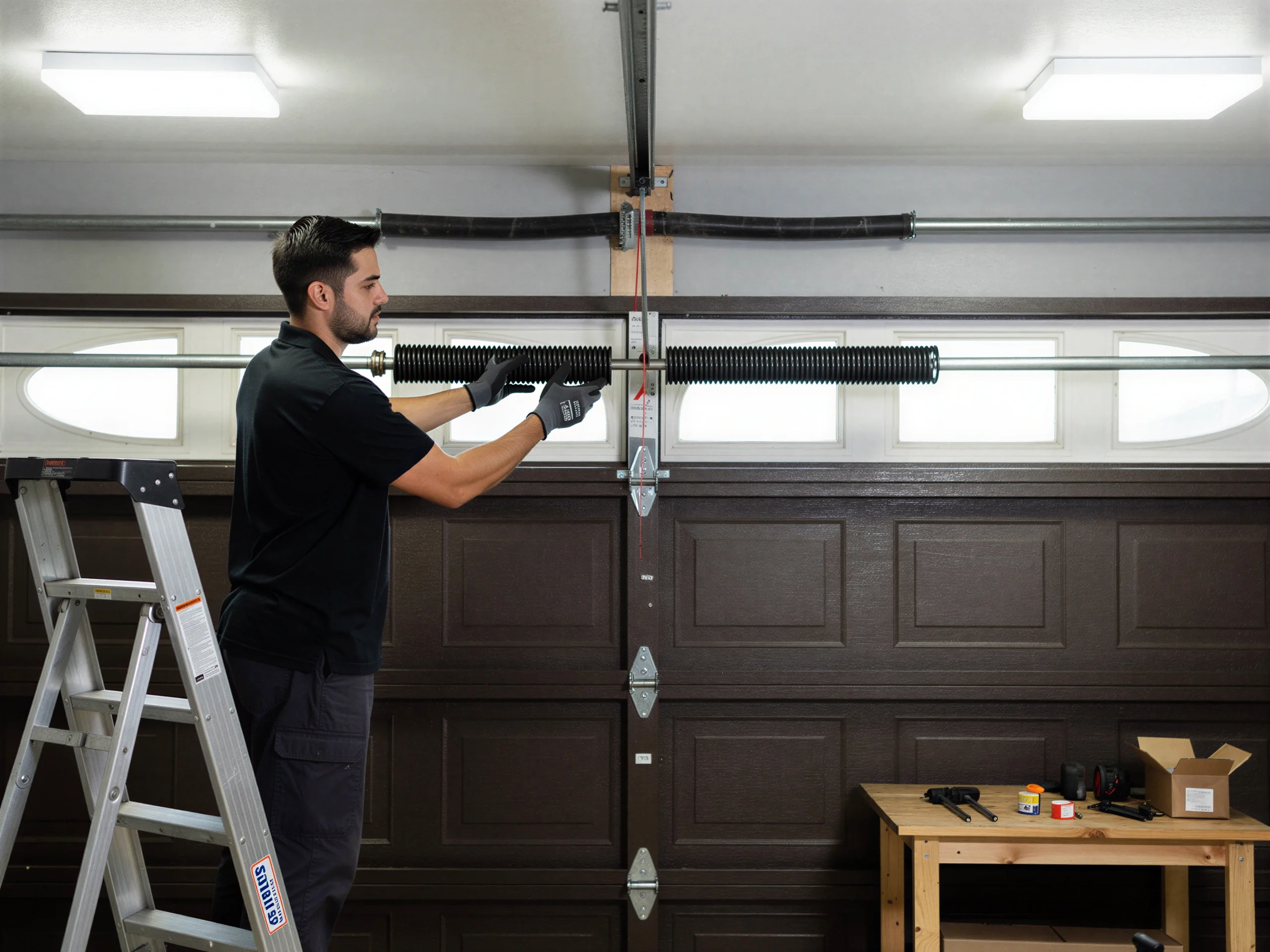
A real maintenance visit starts with the springs - checking tension, looking for gaps in the coils, and listening for the kind of noise that means a spring is near the end of its life.
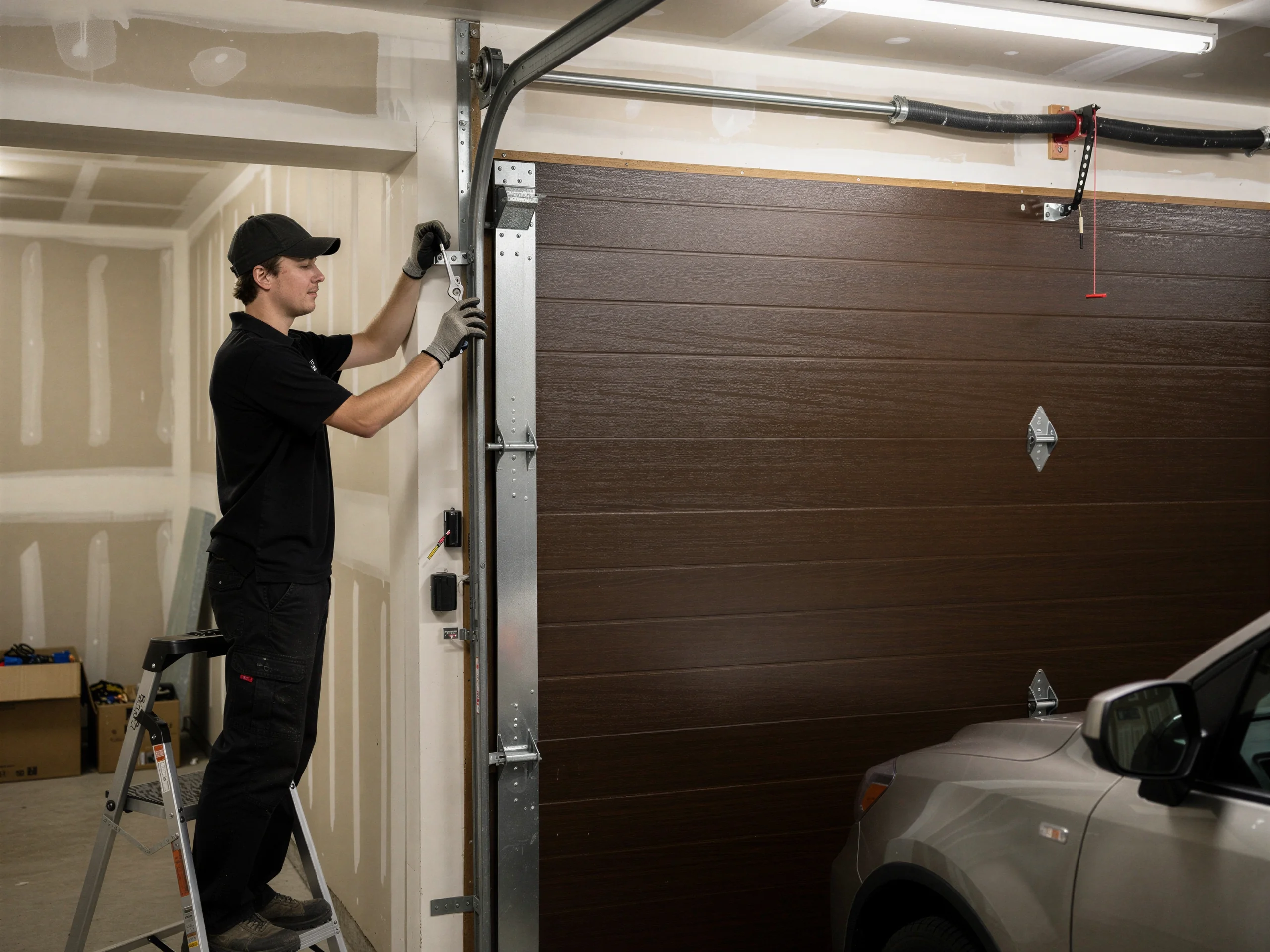
From there we work down the track, checking it for square, cleaning out the grit that's built up since the last freeze, and re-lubricating hinges, rollers, and the torsion bar itself with something rated for cold rather than whatever's on the shelf.
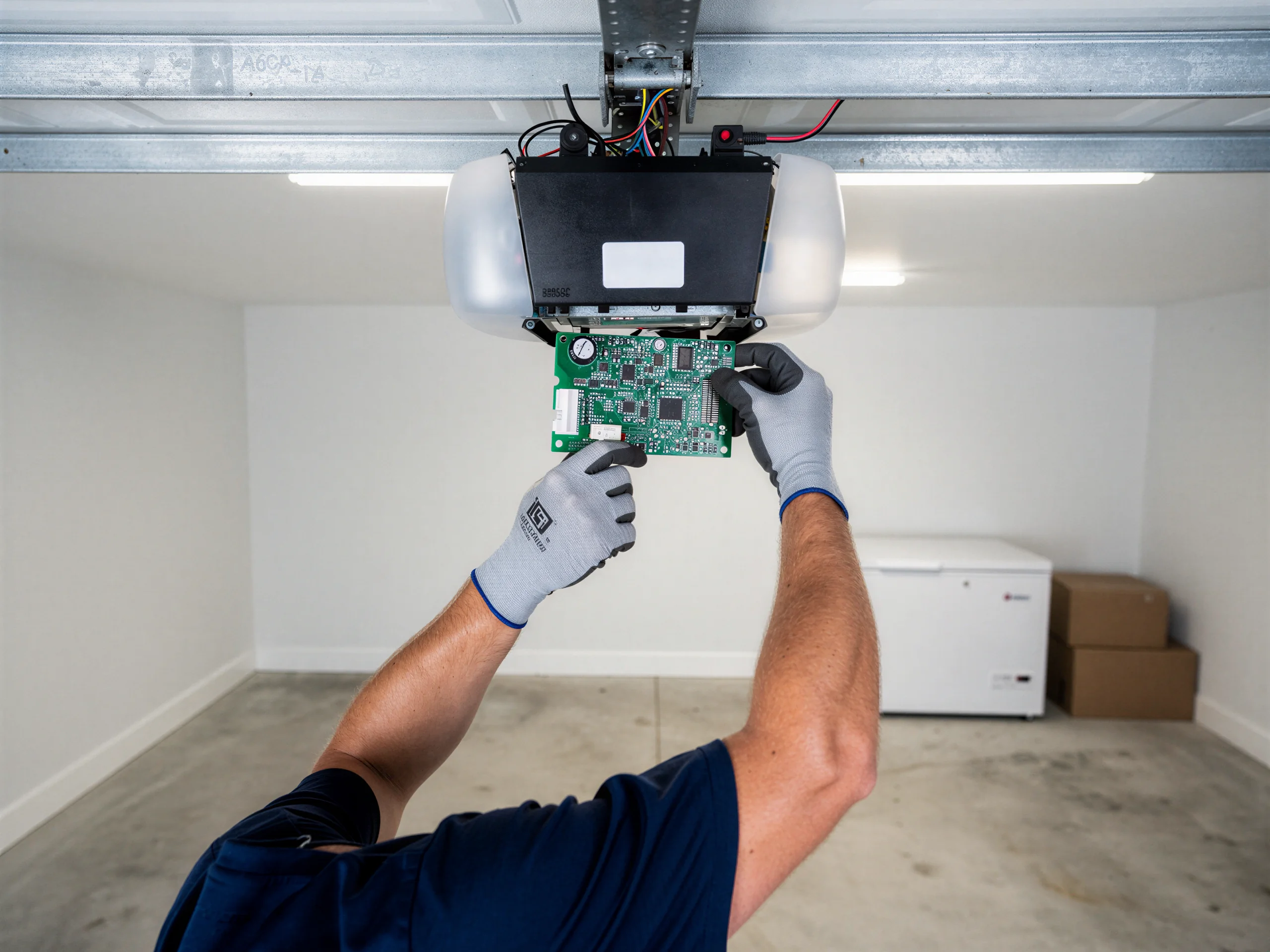
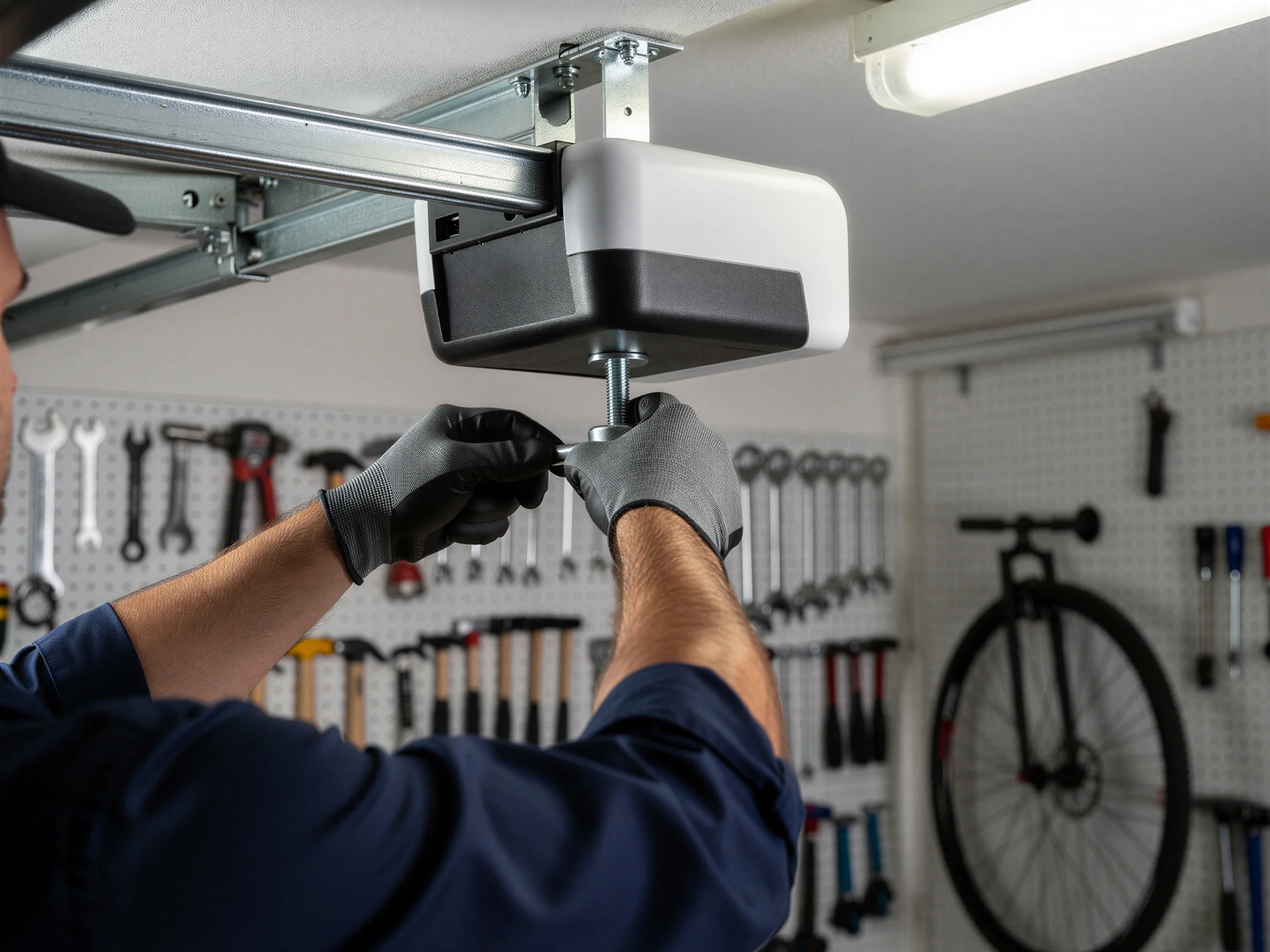
We test the opener's force settings and auto-reverse safety function, because a door that's gotten heavier to lift from spring wear will also hit harder if it comes down on something. Cables get a visual check for fraying, especially near the drum, since a frayed cable under winter tension is one of the faster ways a door comes down wrong.
From Montgomery Village three miles out to Poolesville eight miles west, the opener models we see change with the build era of each neighborhood, so the last step is always matching the adjustment to the actual hardware on the door, not a generic checklist.
Questions
Once a year is the baseline most owners here need, given the freeze-thaw cycles this area goes through. If your door is original to a house built in the 1980s or earlier, or you've noticed any new noise or drag, twice a year is worth it - once before winter and once after.
Sometimes. If it's a spring losing tension or a track that's slightly out of square, a tune-up often solves it. If the spring has already lost too many coils or a cable has frayed through, that's a repair job, not a maintenance visit, and we'll tell you which one you're looking at before we start.
Yes. This area sits in a severe cold climate band, and the repeated contraction and expansion of metal through winter cycles puts extra strain on torsion springs and tracks compared to a mild climate. It doesn't break anything overnight, but it shortens the life of hardware that's already near the end of its rated cycles.
Usually, up to a point. If the door itself is sound and the panels aren't rusted or warped, a tune-up on original hardware from the 80s or 90s often buys years of life. If the springs, track, and opener are all failing at once, we'll say so - replacing the door can be the better call than chasing repairs on all three.
Explore more
Ready when you are
Germantown Garage Door Pros repairs and installs garage doors, springs and openers in Germantown, MD and the surrounding area.