Serving Germantown, MD & nearby(301) 297-2908
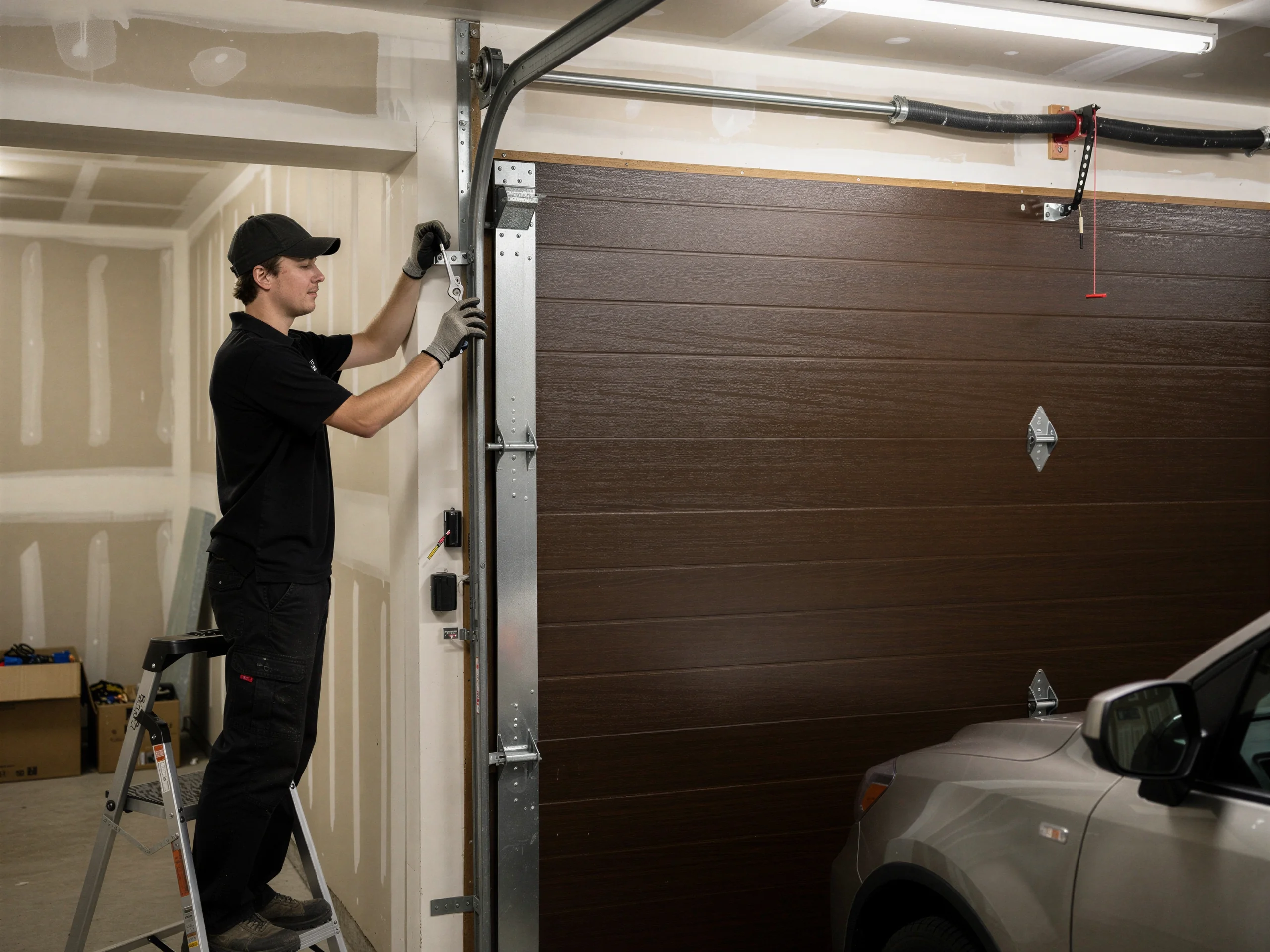
A technician on a ladder adjusts the garage door track next to a brown garage door.Germantown, MD

Germantown, MD

Garage Door Repair in Germantown, MD

Garage door repair for Germantown homes built mostly in the 1980s and 90s. We fix springs, openers, and tracks strained by cold winters and original hardware.

Serving Germantown, MDBackground-checked techsHonest, upfront pricingFast local response
$154,514
Median household income here
92,113
Owner-occupied homes served
1951-2015
Germantown housing range
Cold snaps
When fatigued springs let go

Warning signs

How It Shows Up

Most calls start the same way: the door won't open, or it opens partway and stops. Sometimes it's a loud bang from the garage followed by a door that won't budge at all - that's usually a torsion spring letting go.

Opener runs, door stuck

Other times it's quieter: the opener runs but the door doesn't move, which points to a stripped gear or a disconnected trolley. In Germantown, where housing dates mostly from 1951 through 2015 with the bulk of the stock built in the 1980s and 90s, a lot of what we see traces back to original equipment that's simply reached the end of its service life.
Single-spring failure pattern

A spring rated for a certain number of cycles doesn't care how well you maintained it once that number is hit. Houses from that era also tend to have single-point-of-failure setups - one spring doing the work a newer double-door system might split across two - so when it goes, the door goes with it.

Electrical-seeming opener failure

We also see openers failing outright rather than just acting up. A unit installed when a house was built in, say, 1986 is well past any reasonable lifespan, and the failure often looks electrical before it turns out to be mechanical.

Local causes

What Causes It Around Here

Two things stack on top of each other in this area: the age of the housing stock and the climate. Germantown sits in a cold, severe winter climate band, and that matters more to a garage door than most people think. Steel contracts in cold weather, lubricant thickens, and torsion springs that were already fatigued from age tend to fail on the first hard cold snap of the season rather than gradually.

Because so much of the local housing was built in the 1980s and 90s, a huge share of the doors and openers we're called out to are original or close to it - thirty-plus years of cycling through winters like this one. Nylon rollers from that era turn brittle in the cold and crack. Steel tracks that were never quite aligned right develop a wobble that gets worse every freeze-thaw cycle.

One honest limitation: if your door and opener are both original to a house from that period, we're not always going to recommend patching one more part. Past a certain point, a repair on a 30-plus-year-old system is money spent delaying a replacement you're going to need anyway, and we'll tell you that straight instead of selling you a part.

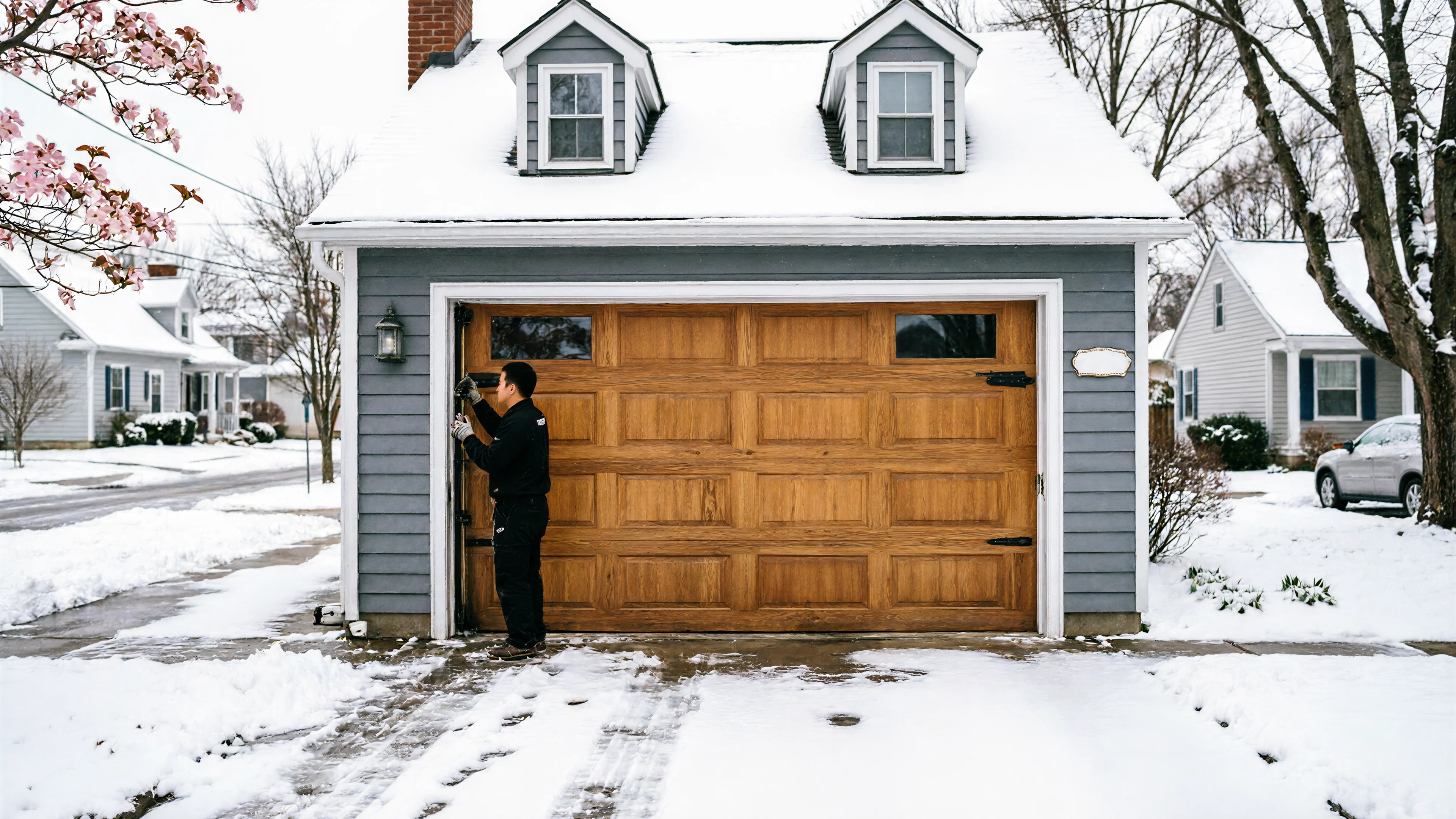
A technician works on a wooden garage door of a house covered in snow.

Pricing

What It Costs

We don't post a flat number here because the range on a repair is wide - a broken roller is a different job than a seized torsion spring on a double door, and parts availability on an older opener can change the math. What we can tell you is how we think about it: with a median household income in this service area around $154,514, most of the households we work with are weighing a repair against a full replacement rather than stretching to afford either one.

That's a real factor in what we recommend. A single spring replacement on a standard door is a contained job. An opener replacement, track realignment, or panel swap on an older door adds up fast once you're paying for parts that aren't stocked anywhere local and have to be ordered in.

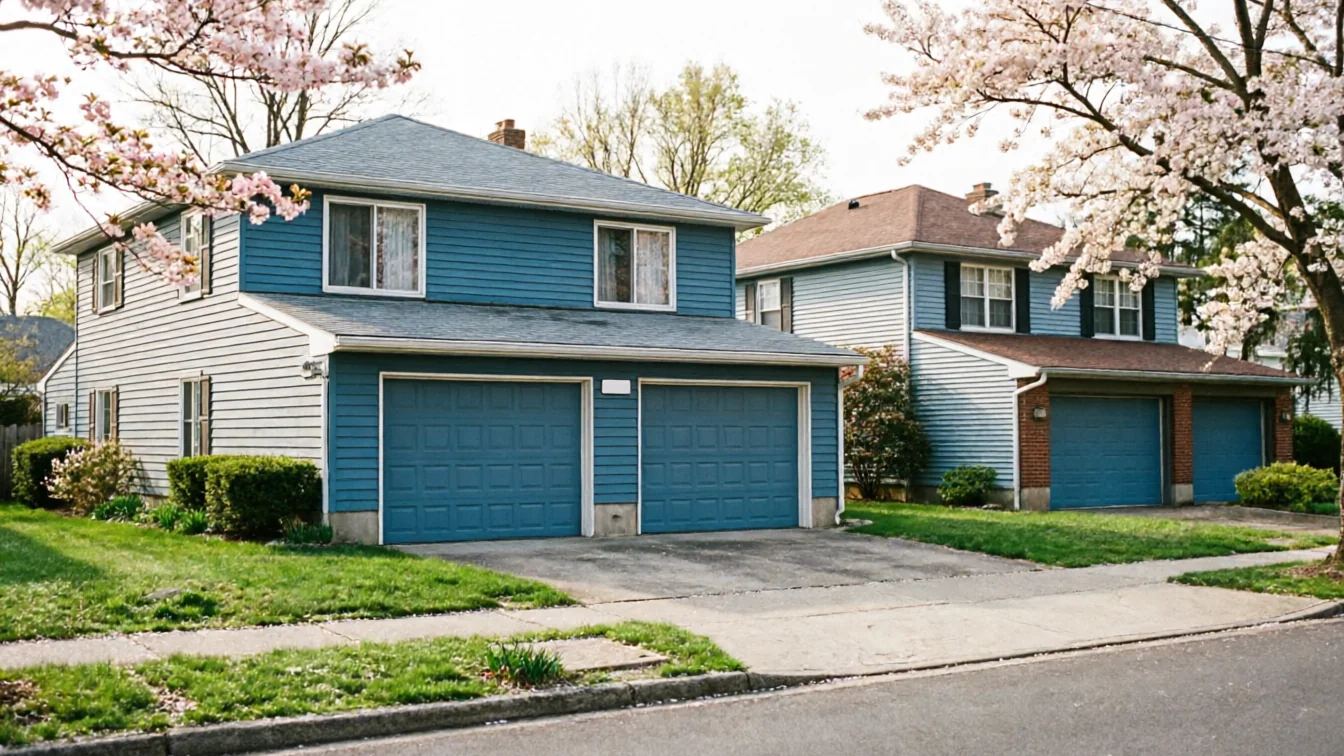
Two blue houses with blue garage doors are visible from the street.

We'll give you the number for your specific door before we touch anything, not after.

The repair

What the Fix Involves

A spring repair means winding down the old spring safely, pulling it, and installing a correctly sized replacement rated for your door's weight and cycle count - not just whatever's closest on the truck.

  1. Shaft and bearing plates

    On a lot of the 1980s and 90s builds around here, that also means checking the shaft and bearing plates, since thirty-plus years of cycling wears those down even when the spring itself was the only thing that failed.

  2. Sensor and board triage first

    Opener work usually starts with ruling out the simple stuff - sensor alignment, logic board faults - before we get into gear or motor replacement. With 92,113 owner-occupied houses across this service area, we see a wide spread of opener brands and ages, and parts lead time on an older model is sometimes the actual bottleneck, not the labor.

  3. Track and roller physical work

    Track and roller jobs are more physical than technical: realigning bent track, swapping brittle rollers for steel ones that hold up better in cold weather, and re-tensioning cables that have stretched. We test the full cycle before we leave, not just the first open and close.

Questions

Common questions

Why did my garage door spring break in the middle of winter?

Cold makes steel contract and lubricant thicken, which adds strain to a spring that's already near the end of its rated cycle count. In a cold, severe winter climate like Germantown's, springs that are going to fail tend to pick the first hard freeze to do it. It's rarely bad luck alone - it's age meeting weather.

Is it worth repairing an opener from the 1980s or 90s?

Sometimes, if the failure is isolated - a sensor or logic board issue on an otherwise sound unit. But a lot of houses in this area have openers original to construction from that period, and once the motor or gear train goes, parts are often special-order. At that point replacement usually makes more financial sense than a repair.

Do you give a price before starting the work?

Yes. We look at your specific door and opener first, since the cost difference between a roller swap and a full spring-and-track job is significant. We don't post a flat rate because the range genuinely depends on what's failed and how old the system is.

Explore more

Explore More Services In Germantown, MD

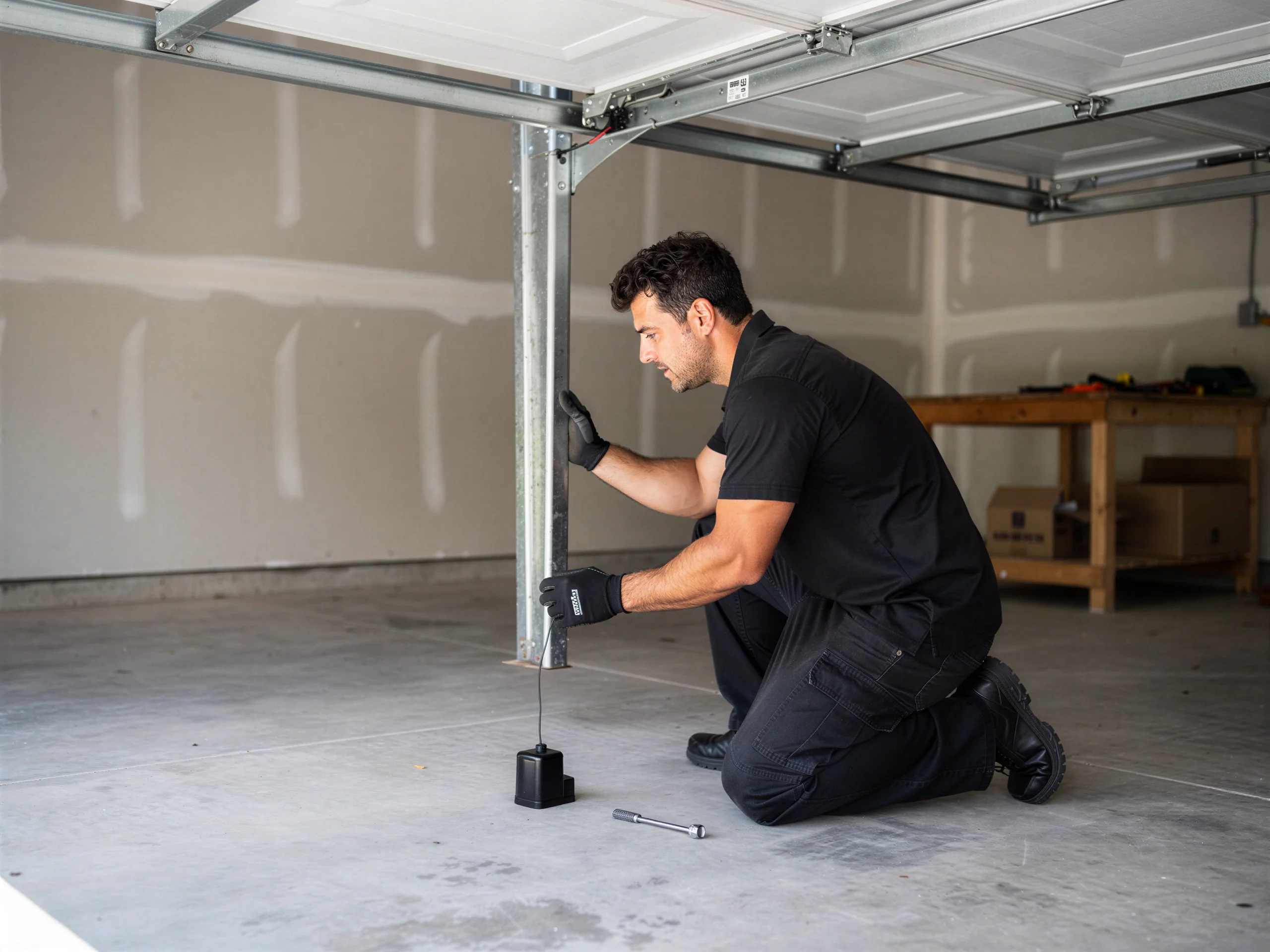
A technician kneels, holding a garage door track with a plumb bob on the floor.

Garage Door Service for Germantown Homes

Garage door service for Germantown homes built between 1951 and 2015, where cold winters and aging torsion springs cause most of the calls we run. Learn more →
A technician kneels, holding a garage door track with a plumb bob on the floor.

Keeping Garage Doors Running Through Germantown Winters

Garage door maintenance in Germantown, MD for homes built from the 1950s through the 2010s, tuned for severe cold winters and heavy spring and track wear. Learn more →
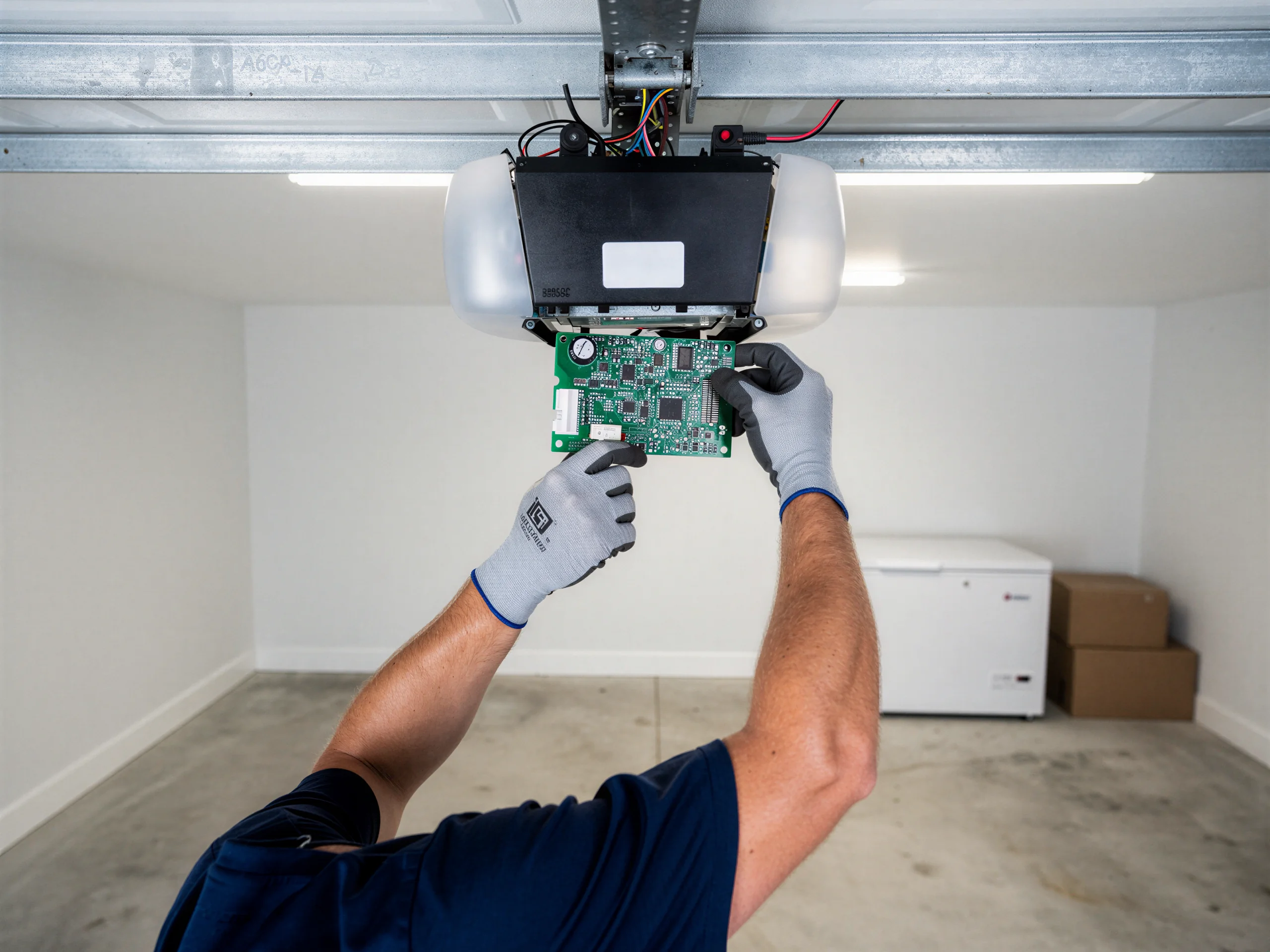
A technician wearing gloves holds a circuit board near a garage door opener.

Garage Door Opener Repair Across the Germantown Service Area

Opener repair across the Germantown service area, built around the area's 1980s-90s housing stock and cold-climate opener strain. Learn more →
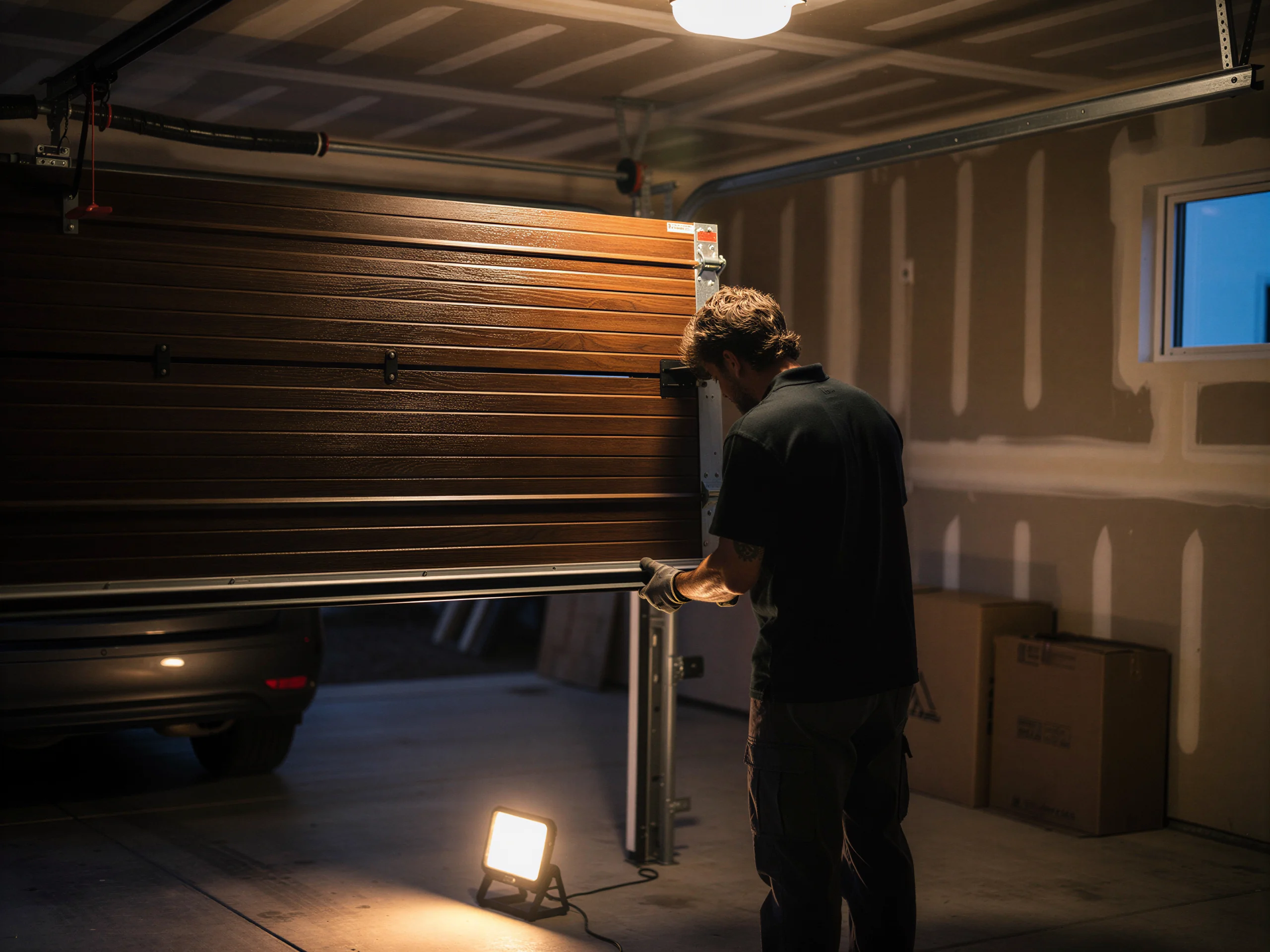
A technician works on a brown garage door in a garage with a car.

Emergency Garage Door Repair, Germantown

Broken spring or jammed door at 2am in Germantown? Learn more →
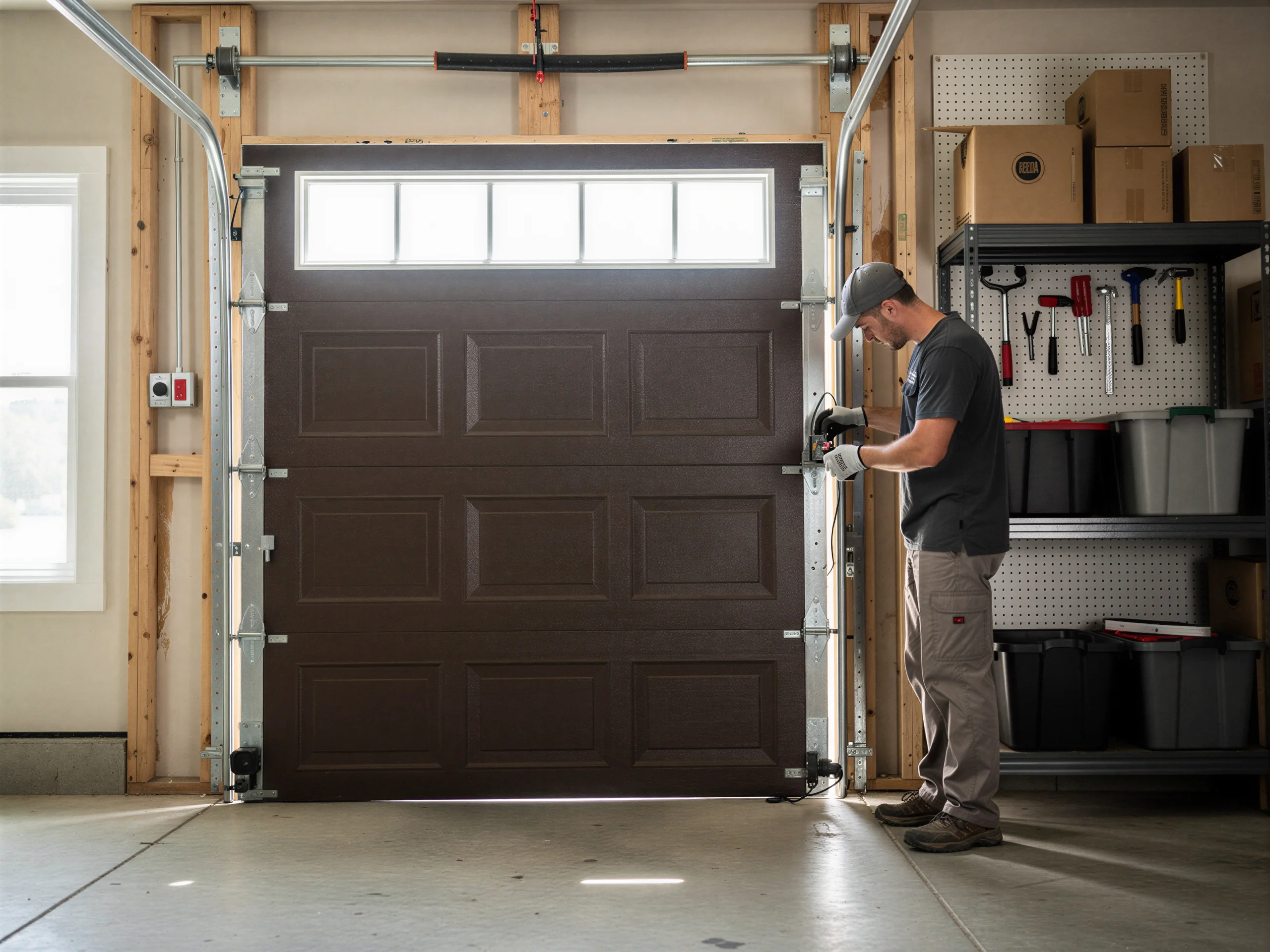
A technician works on a brown garage door with windows in a garage.

New Garage Door Installation in Germantown

New garage door installation in Germantown, MD, built for the area's 1980s-90s housing stock and severe cold-climate wind loads, not generic big-box sizing. Learn more →
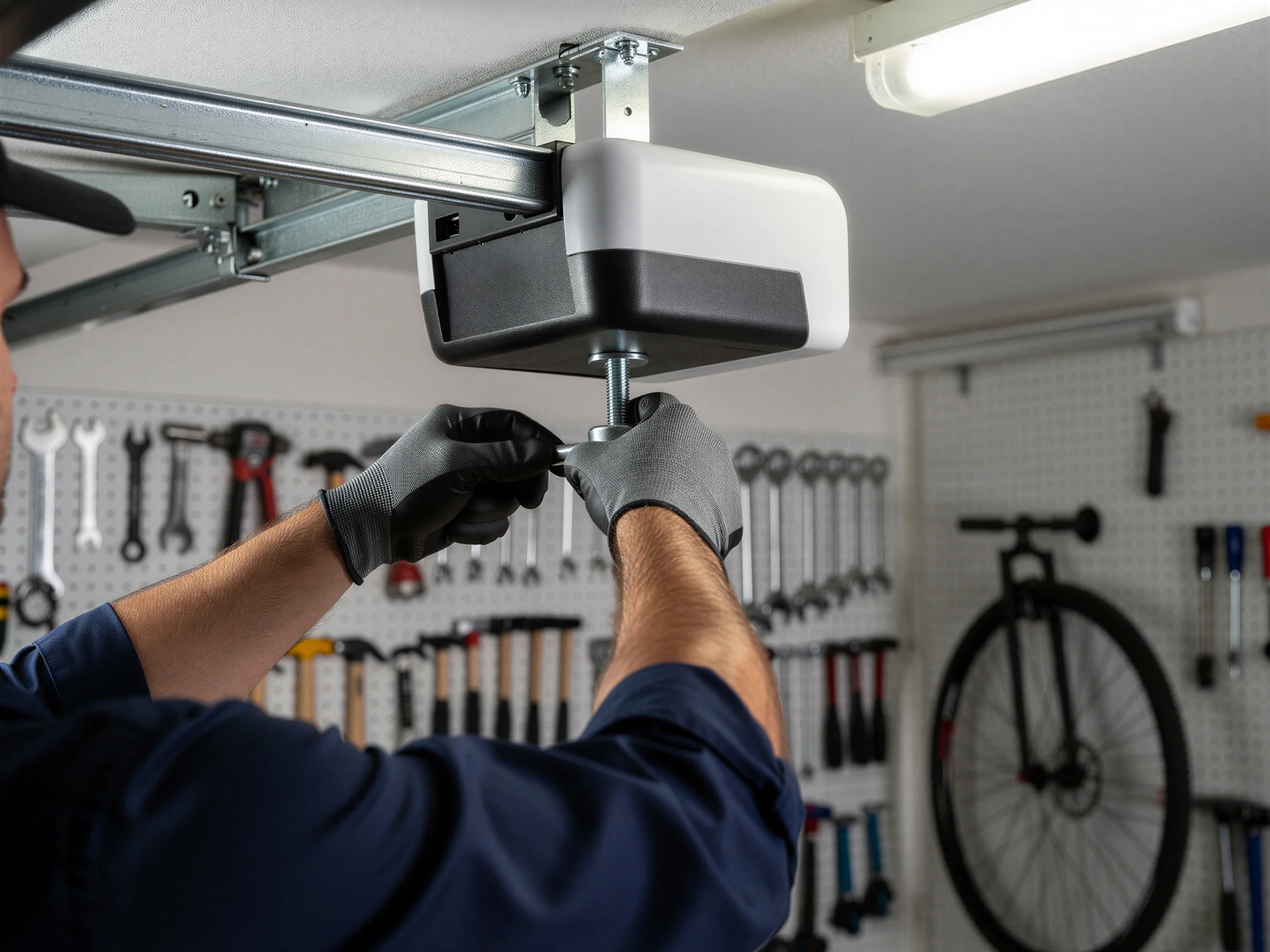
A technician installs a garage door opener in a garage with tools on a pegboard.

Garage Door Opener Installation for Germantown-Area Homes

Opener installation for Germantown-area homes built mostly in the 1980s and 90s, matched to a cold-climate service territory and aging original hardware. Learn more →

Ready when you are

Garage door trouble in Germantown?

Germantown Garage Door Pros repairs and installs garage doors, springs and openers in Germantown, MD and the surrounding area.

Call Now(301) 297-2908