
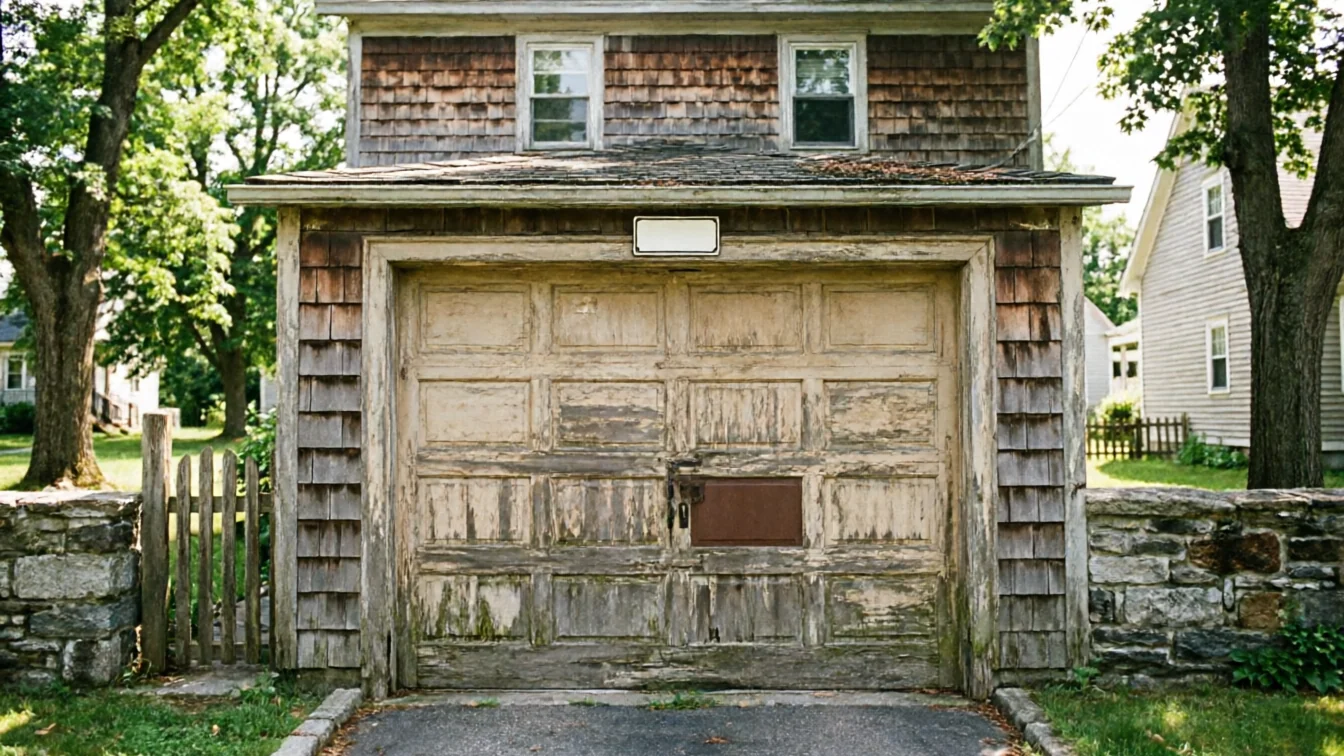
 Is Your Germantown Garage Door Worth Fixing, or Is It Time to Replace?
Germantown homes built mostly in the 1980s-90s face cold-weather wear on original doors.
BlogGermantown, MD · 5 min read
Why a Garage Door Goes Off Track in Germantown
Germantown homes built mostly in the 1980s and 90s see track problems tied to original hardware and hard winter cold. Here's what actually causes it.
Local detail
When to Get Help
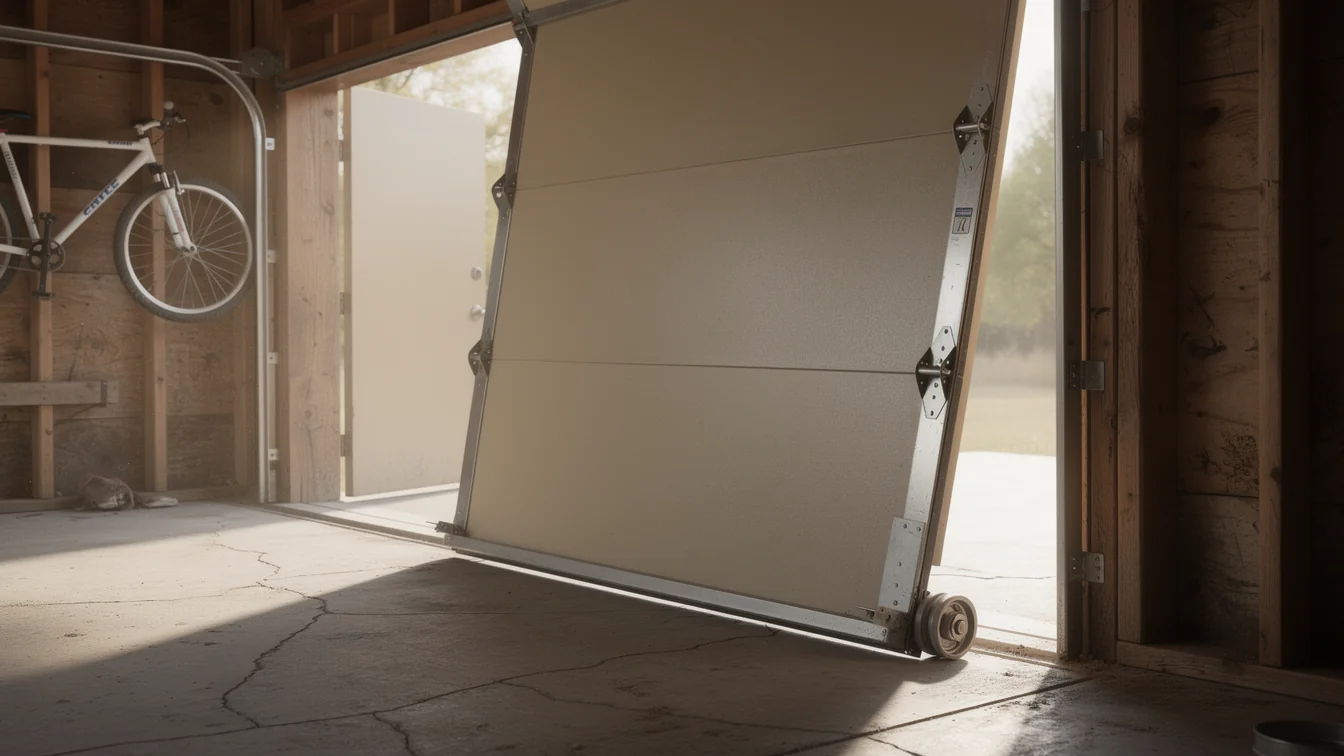
If the door is hanging crooked, if one side has dropped lower than the other, or if you hear a grinding or popping sound as it moves, stop running it. A door that's come partway off its track can still look like it's working right up until a roller jumps the rail completely and the panel drops. That's a door that can come down on a car or a kid.
In a lot of the housing stock here - built between 1951 and 2015, with most of it going up in the 1980s and 90s - the original steel tracks are still in the house. Thirty-plus years of use on hardware that was never top-grade to begin with means the bolts holding the track to the jamb work loose, and a loose track is the number one reason a door walks off its rails. If you can see daylight between the track and the bracket, that's your sign to call rather than keep opening and closing it.
We don't try to talk anyone into a same-day emergency call for a door that's just a little noisy. If it's still running straight and both sides are level, it can usually wait for a scheduled visit.
The area
What Local Conditions Do
This area sits in a severe cold climate band, and that matters for track alignment more than most homeowners expect. Steel track expands and contracts with temperature swings, and the brackets holding it to a wood jamb don't move at the same rate the metal does. Over a winter with hard freezes followed by a warm stretch, that repeated flex loosens lag screws a fraction of a turn at a time. One winter doesn't do it. Fifteen or twenty winters on a house built in the 1980s does.
Cold also stiffens the grease in the rollers and hardens old nylon rollers so they don't ride smooth in the channel. A roller that's dragging instead of rolling puts sideways pressure on the track with every cycle, and sideways pressure is what eventually bends a rail or pulls a bracket loose. We see more off-track calls here in the cold months than in summer, and it's not coincidence - it's the hardware responding to the swing.
None of this means the door is broken beyond repair. Most of the time it means the track needs resetting, squaring, and the brackets retightened or replaced, which is a different job than people assume when the door looks dramatically crooked.
What we find
What Most People Get Wrong
The most common mistake is assuming an off-track door means a new door. With houses in this area mostly dating to the 1980s and 90s, the track itself is often fine - it's the fasteners and the alignment that have drifted, not the metal. Replacing a whole door system when the fix is a re-leveled track and new brackets is money spent on the wrong problem.
The second mistake is trying to force the door back onto the track by hand, usually by someone standing on a stepladder pushing on the panel while a torsion spring is still under full tension. That spring doesn't care that you're trying to help - it can do real damage if the door shifts wrong while you're in reach of it.
The third mistake is ignoring a slight list to one side for months, figuring it'll hold until something fails outright. A door that's a little off level puts uneven load on both tracks, and uneven load is how one side eventually gives while the other holds, which is a worse and more expensive repair than catching it early. We'd rather get a call for a door that's slightly crooked than one that's fully derailed.
How we work
What Is Going On
Mechanically, a door goes off track one of three ways: a roller breaks or seizes and stops riding the channel, a bracket pulls loose from the jamb so the rail itself shifts position, or the track gets bent, usually from something hitting it or from a cable that's come off its drum and let the door drop unevenly.
Given the age of housing across this service area - built mostly between 1951 and 2015 with a lot of it dating to the 1980s and 90s - the bracket-pulling-loose scenario is the one we see most. Original hardware, decades of seasonal temperature swings in a cold climate, and wood jambs that have shrunk slightly over time all work against the fasteners holding things square.
The fix depends on which of the three it is. A seized roller is a cheap swap. A loose bracket means resetting and re-anchoring the track, sometimes into fresh wood if the old holes have worn oversized. A bent track usually means replacing that section rather than trying to hammer it straight, since a track that's been bent once rarely holds alignment the same way twice. We'll tell you straight which one you're dealing with before we start any work, not after.
Questions
Common questions
Can I push my garage door back onto the track myself?
No. If the door is under spring tension - and most residential torsion doors are, even when they're sitting still - pushing or pulling on a derailed panel can cause it to shift suddenly. Call for a look before you touch it, especially on a double-wide door.
Is an off-track door always a sign I need a new door?
Not usually. In houses built in the 1980s and 90s, which make up a lot of the stock in this area, the track itself typically outlasts the brackets and fasteners holding it. Most off-track calls end with a reset and re-anchored hardware, not a full replacement.
Why does this happen more in winter here?
The cold climate here puts steel track through repeated expansion and contraction, which gradually loosens the screws anchoring it to the jamb. Combined with stiffened rollers that don't glide as smooth in cold weather, that's a common setup for a door to walk off its rail.
How do I know if it's the track or the opener?
If the door looks physically crooked, tilted, or has a visible gap between the rail and the bracket, it's the track. If the door sits straight but won't respond or stutters, that's more likely the opener or the drive mechanism. We can tell quickly on site.
Recommendation
You Might Also Like
More garage door guides for Germantown homeowners.
Is Your Germantown Garage Door Worth Fixing, or Is It Time to Replace?
Germantown homes built mostly in the 1980s-90s face cold-weather wear on original doors.
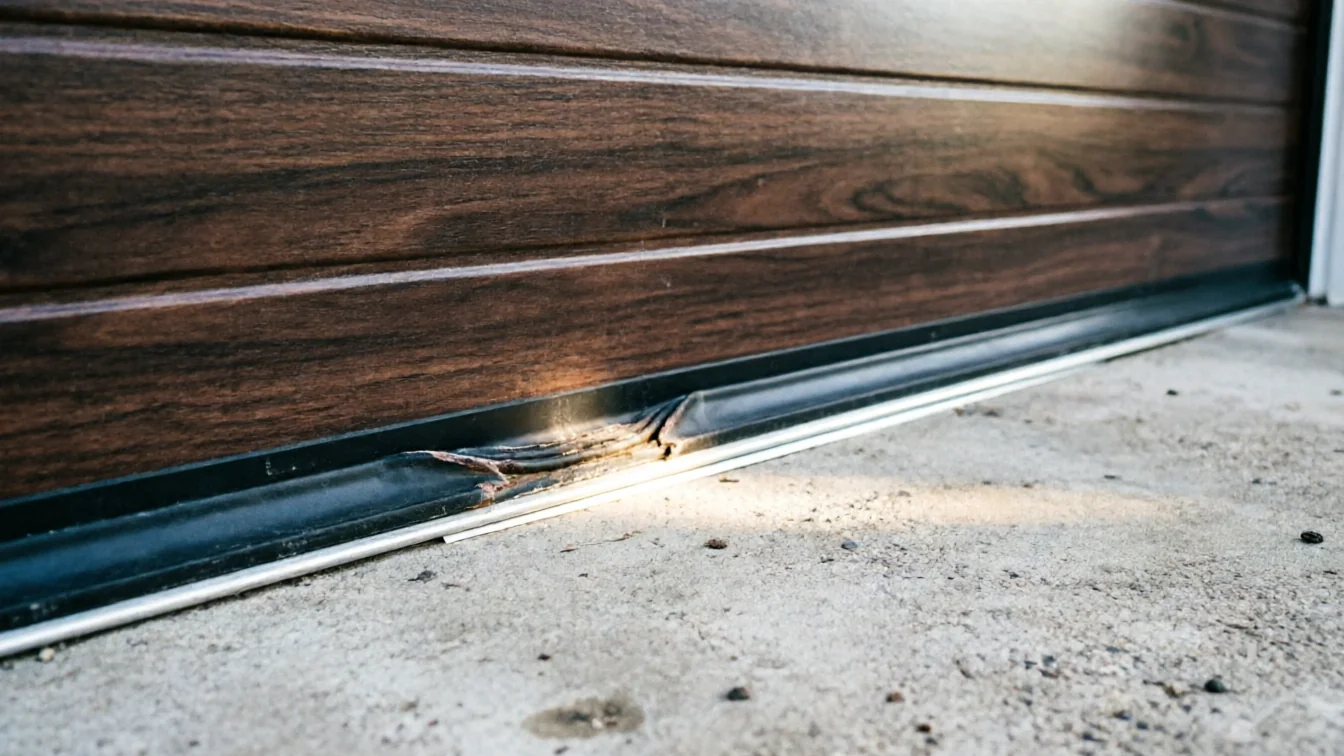 Weather Seals and Draughts in Germantown's 1980s and 90s Garage Doors
Germantown homes built mostly in the 1980s and 90s face cold-climate draughts and worn seals.
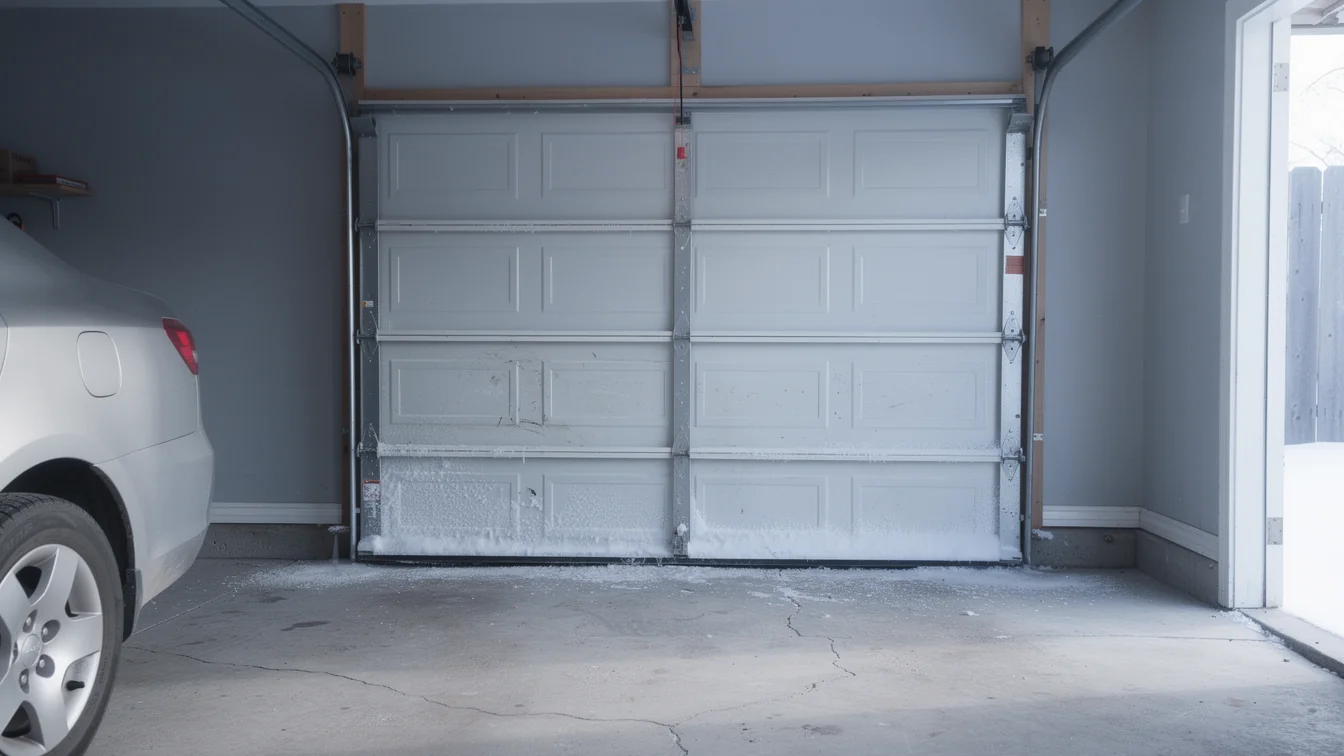 Garage Doors on Germantown Houses Built Before Insulation Rules Tightened
Germantown's housing stock runs 1951-2015, median 1984, mostly 1980s-90s builds that predate modern insulation codes.
Ready when you are
Need a garage door sorted in Germantown?
Germantown Garage Door Pros repairs and installs garage doors, springs and openers in Germantown, MD and the surrounding area.