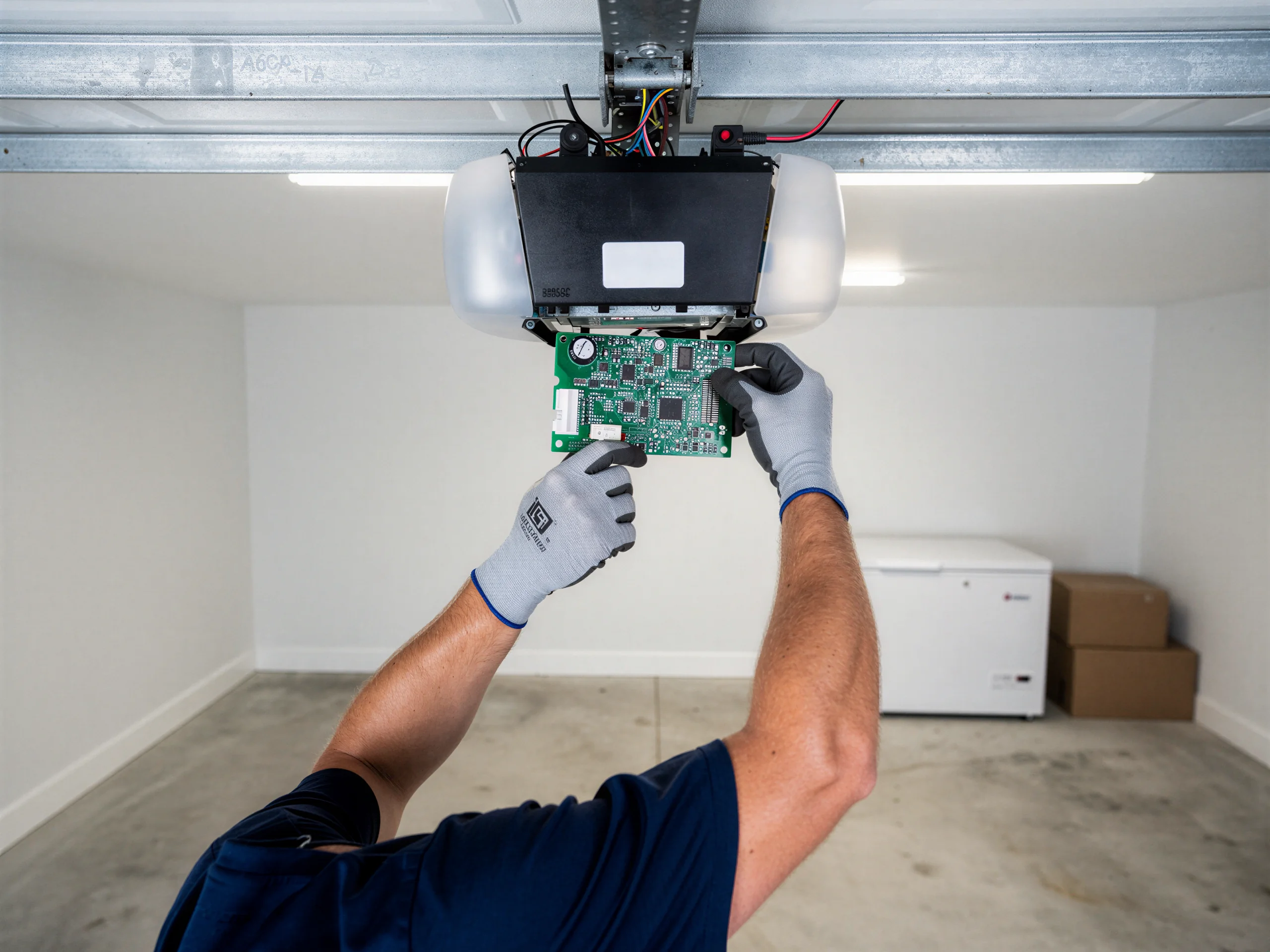
Stocked safety sensor pairs
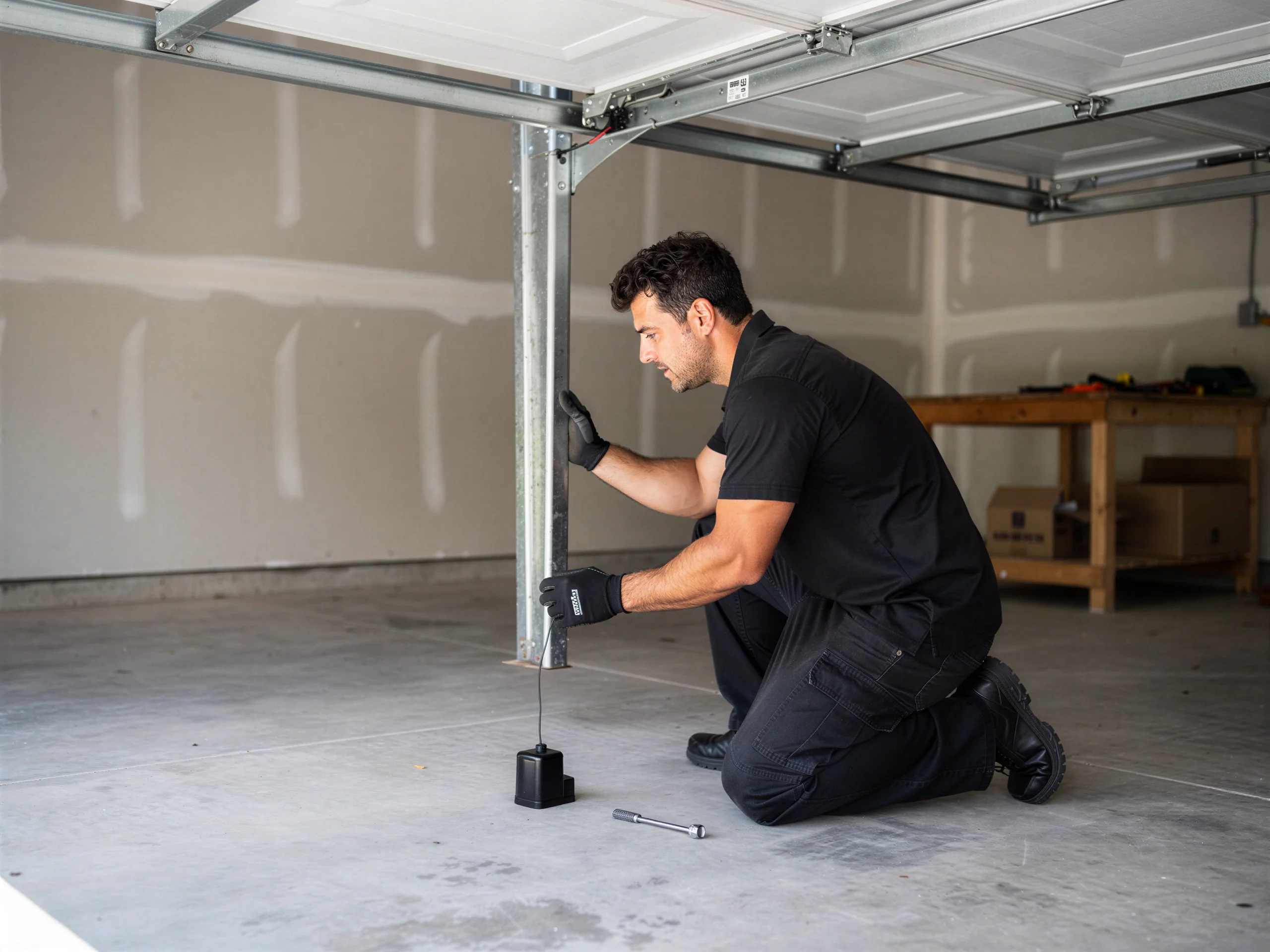
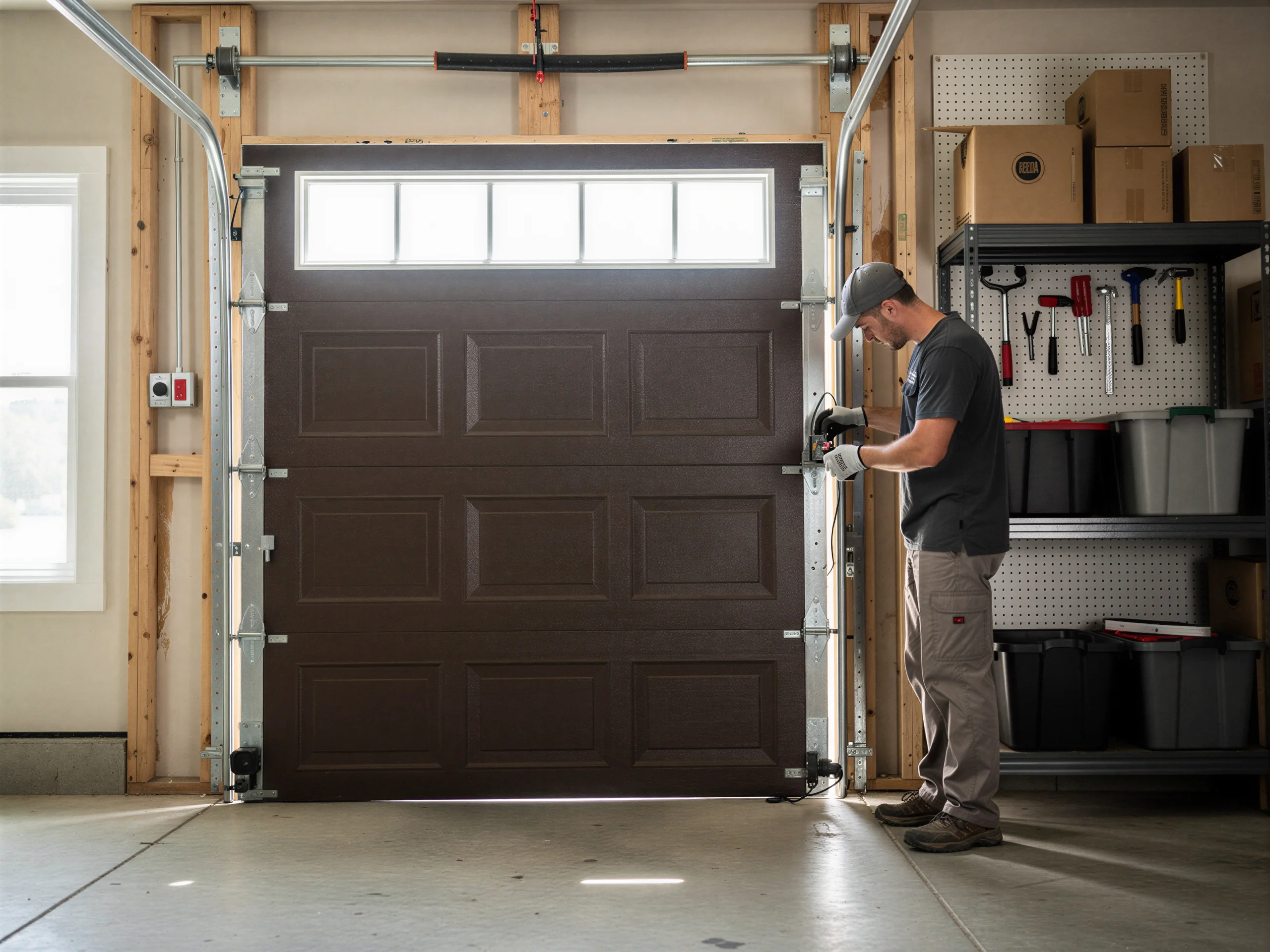
We stock standard safety-eye sensor pairs and the wiring harnesses that go with them, since those fail more from age and moisture than from any one dramatic event.
 Germantown, MD
Darnestown, Germantown
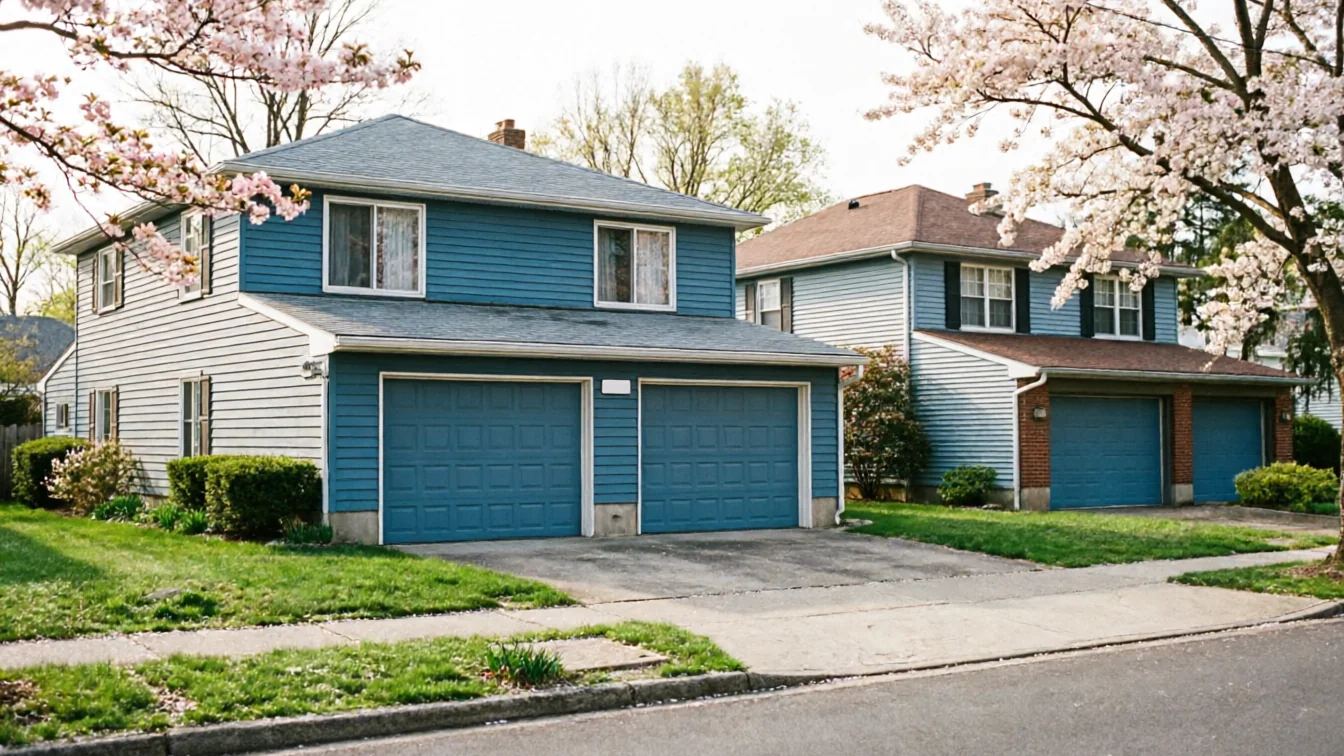
Darnestown homes built mostly in 1985 often still run original openers. Germantown Garage Door Pros drives 6 miles out to diagnose and fix gear, logic, and sensor failures.
Watch-outs
Darnestown's median house went up around 1985, and a lot of openers out here have never been swapped once. That means the unit bolted to your ceiling is likely the original chain or screw drive from the build, not a replacement. The job goes sideways when a homeowner assumes the opener is dead and orders a new one, when really the fault is a stripped plastic drive gear or a logic board that's lost its memory after a power blip - a $40-$80 part fix instead of a full unit swap. We come from Germantown, about 6 miles in, so we'd rather diagnose on the first trip than have you buy the wrong part twice. The other way it goes sideways: people in this income bracket sometimes go straight to full replacement when the motor and gearing are fine and only the sensors or the wall control have failed. We'll tell you straight which one you've got before you spend money.
On the truck
For openers this old, we carry drive gears and sprockets sized for the chain and screw-drive units common to mid-1980s installs, plus logic boards and capacitors for the control box style that era used.
We stock standard safety-eye sensor pairs and the wiring harnesses that go with them, since those fail more from age and moisture than from any one dramatic event.
What we don't carry on the truck: obsolete belt-drive carriages or wall consoles for opener brands that stopped making parts years ago. If your unit needs one of those, we order it and tell you the lead time before we start, rather than let the job sit half-finished.
Local causes
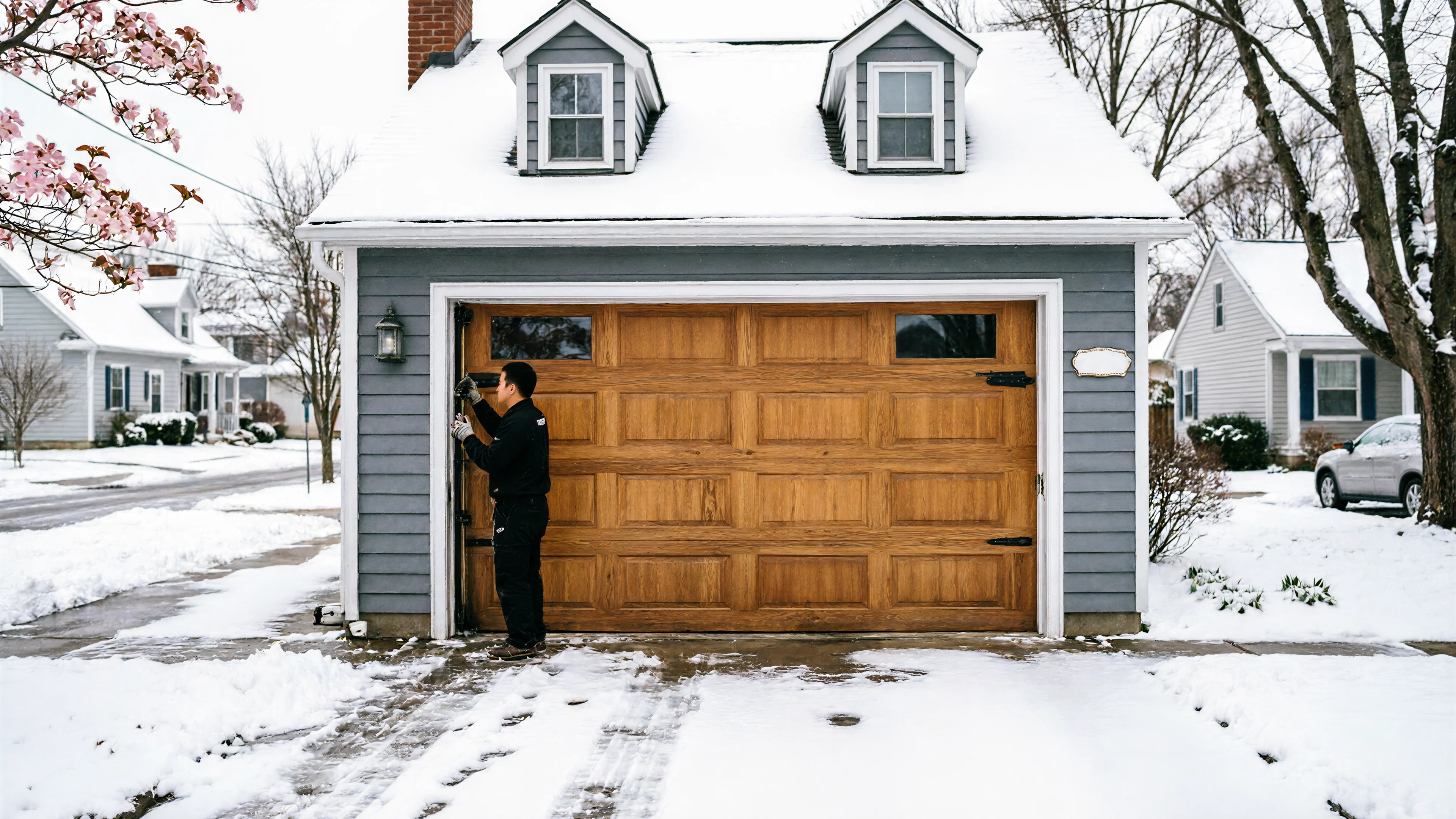
Darnestown sits in a cold-severe climate band, and that matters more for openers than people expect. Grease inside a decades-old drive housing thickens in a hard freeze, and a motor that has to fight stiff gear grease every morning wears its gear teeth down faster than one that's lubricated for the cold. With 2,314 households in this pocket and most of the housing stock dating to the 1980s or 90s, we see the same pattern across a lot of these driveways: original hardware, original gearing, and a motor that's been working harder than it should for years before it finally quits. Temperature swings also crack the plastic drive gear outright in units that have never been serviced, which is the single most common part we replace out here.
Downtime
Most opener repairs here are same-visit: gear swap, sensor realignment, or logic board reset usually gets the door running again before we leave.
Where you're without the opener longer is when the part isn't something we carry on the truck - an obsolete control board for a brand no longer in production, for instance.
In that case we'll manually release the door so you can open and close it by hand while the part ships. We won't guess at a timeline we can't back up; we tell you what the supplier quotes us, and we quote you the same number.
Warning signs
Serving Germantown, MD
The opener hums but the door doesn't move - usually a stripped gear, common on units this age. The door reverses halfway up or down - often a misaligned or dirty safety sensor, not a motor problem at all. The remote works intermittently or not at all while the wall button still does - that points to the logic board, not the motor. A loud grinding or clicking from the housing that gets worse in cold weather - that's gear wear accelerated by stiff old grease, which lines up with what we see across Darnestown's cold winters. None of these mean the opener is dead; they mean one part inside it has reached the end of its life while the motor itself may be fine.
The repair
We start by running the door through a full cycle and watching where it hesitates, reverses, or stalls, rather than opening the housing first. That tells us whether we're dealing with the motor, the gear, the sensors, or the board.
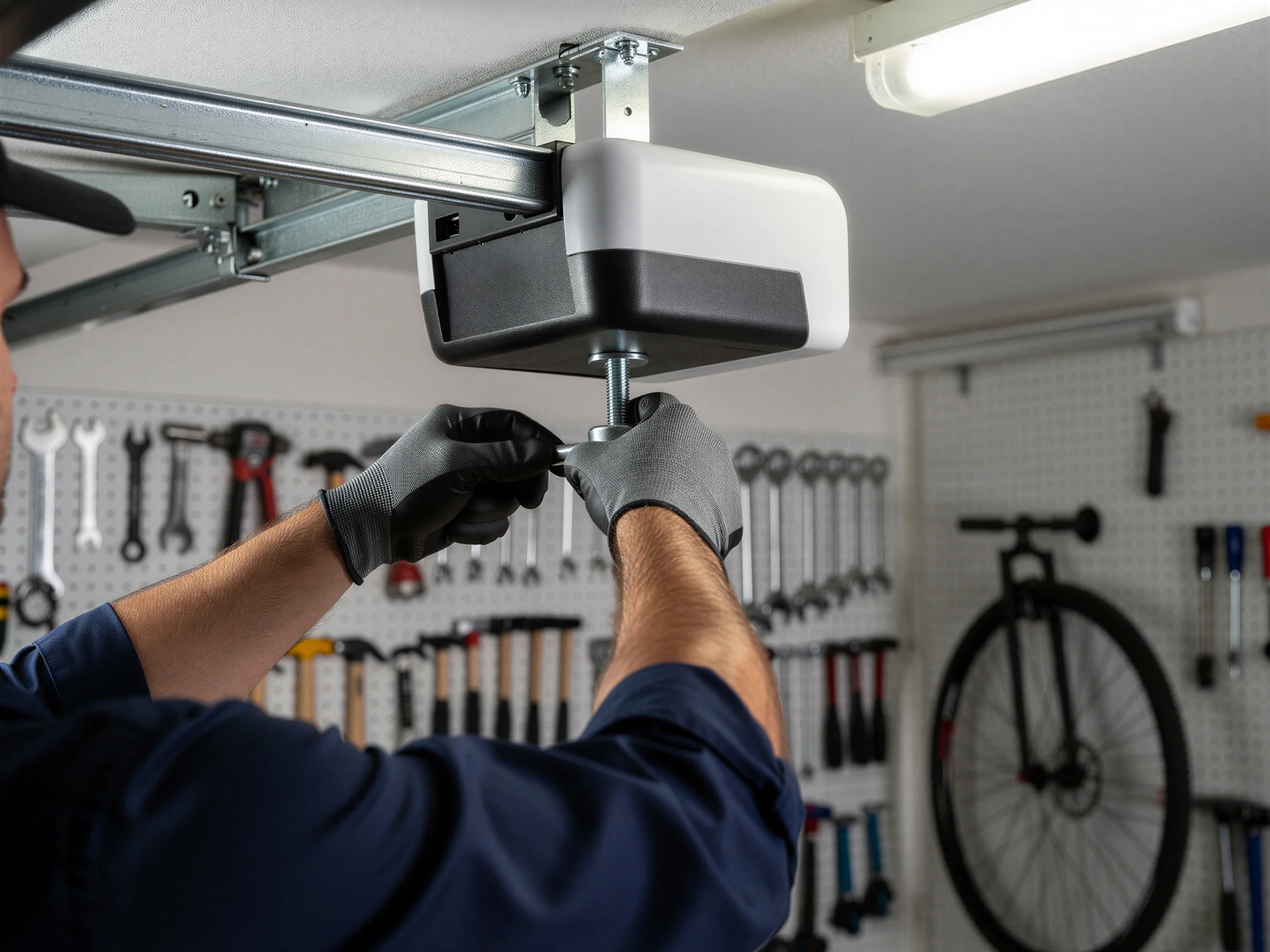
If it's the gear, we pull the housing cover, replace the drive gear and sprocket, and regrease for cold-weather service rather than the stock grease it shipped with in the 80s.
If it's a sensor, we realign and reseat the wiring, since loose or corroded connections cause more sensor faults than the sensor itself failing. A board swap means transferring your remote codes so you're not reprogramming every clicker in the house.
One honest limit: if the opener housing itself is cracked or the motor windings have burned out, repair isn't worth it financially, and we'll say so instead of charging you for parts on a motor that's done.
Questions
Depends what's failed. A stripped gear, bad sensor, or dead logic board is usually cheaper to fix than replace, even on a unit from the 1980s. If the motor windings are burned out or the housing is cracked, replacement makes more sense. We check the motor first before recommending either.
Cold thickens the grease inside the drive housing, which makes the motor work harder to turn the gear. Over years that extra strain wears the gear teeth down faster. It's a common pattern in this climate band, not a sign the whole unit is failing.
We carry drive gears, sprockets, logic boards, and sensor pairs that fit the chain and screw-drive units common to that era, since a lot of Darnestown homes still run their original opener. Obsolete belt-drive or console parts sometimes need to be ordered.
We drive from Germantown, about 6 miles in. We don't keep a branch or depot in Darnestown itself, so we diagnose carefully on the first visit to avoid a second trip for the wrong part.
Explore more
Ready when you are
Germantown Garage Door Pros repairs and installs garage doors, springs and openers in Germantown, MD and the surrounding area.